

The 57-Year Detour
How two friends separated by oceans and decades found their way back to each other.

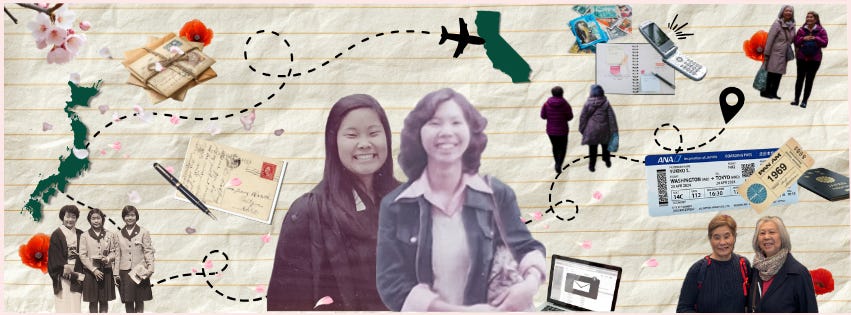
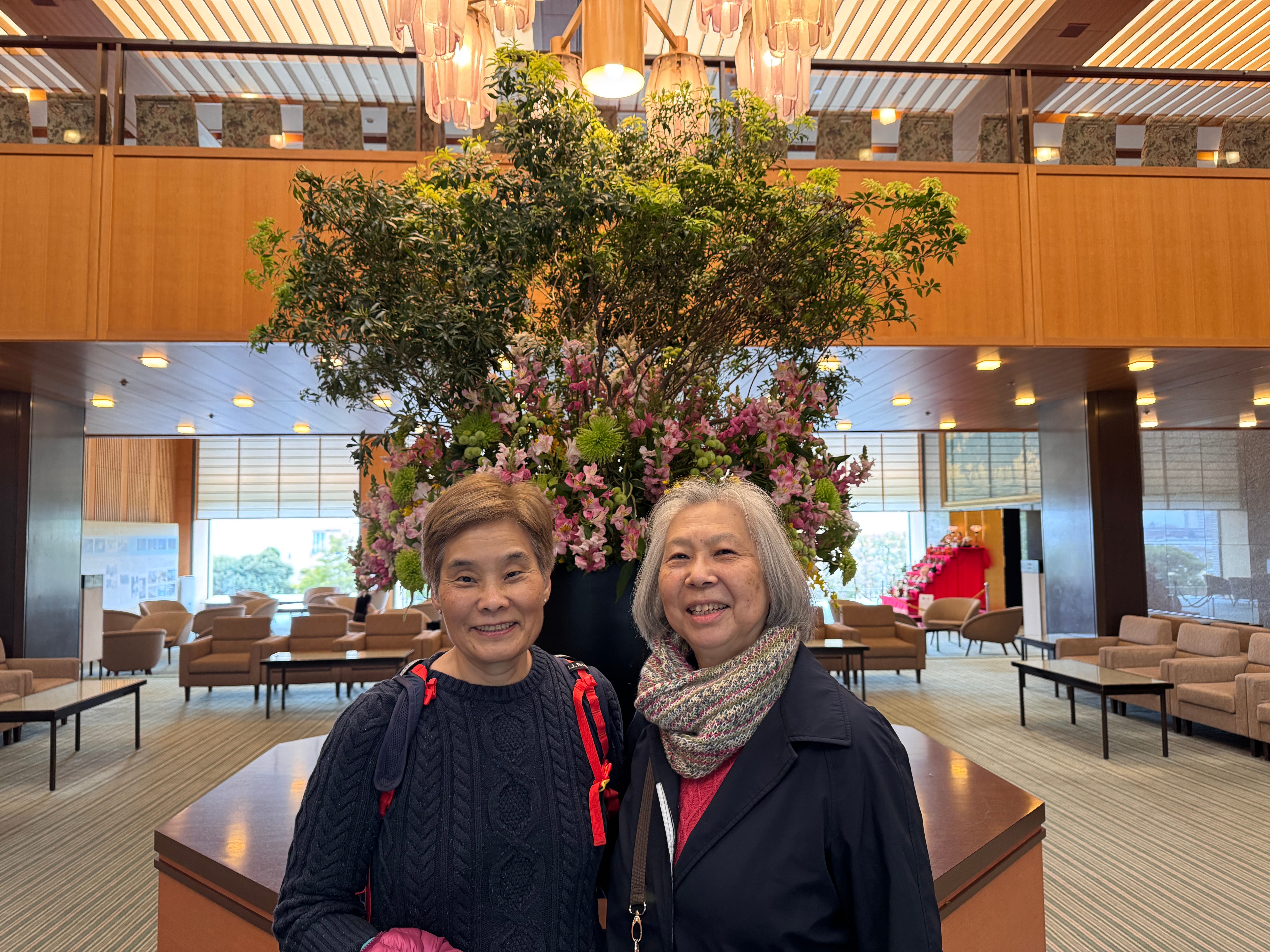
My mom and I were on an airplane somewhere over Alaska this February when I turned to her and asked what, exactly, the plan was. We’ve visited Japan together annually since I was a child, and this time we were headed to Kansai, the region famous for Osaka and Kyoto. We make an effort to explore different parts of Japan, but her primary motivation this trip was to see an old friend named Mariko. They were classmates until my mom, Yuki, immigrated to the US in 1969 at age 14.
My mom smiled sheepishly and confessed that she wasn’t sure what the plan was. Mariko was so self-admittedly offline that Yuki had to snail mail her a letter reminder to check her email. It had been over a month and there still was no word on the official plan. I gawked at the revelation. In that moment I felt deeply skeptical the meet-up would happen. Wouldn’t she have checked her email unprompted if she actually wanted to meet up with us? Regardless, my mom and I would have a good time. We’ve managed many-a-trip to Japan, just the two of us.
This wasn’t the first time they had trouble linking up. Yuki and Mariko’s communication over the years was spasmodic. For several years in their 40s, for instance, they both lived on the East Coast—Yuki in the Washington, D.C. area and Mariko in New Jersey—and they never once met up. They were penpals throughout high school and had recently reconnected online, but beyond that I didn’t quite understand the connection. Since we were going out of our way to meet Mariko under such uncertain circumstances, I asked my mom what the motivation was.
A Kindness Remembered
Over the years, I’ve heard stories about my mom’s experience assimilating in the U.S.: How overwhelming it was to study for the SATs at the same time she was learning English, the inspiring view of the Golden Gate Bridge from the library in her new neighborhood, tricks for pronouncing the word “milk” (by replacing the “l” sound with a soft “w”), how being both a twin and the only Asian students at their high school brought my introverted mother a lot of unwanted attention. What I knew less about was what she had left behind.
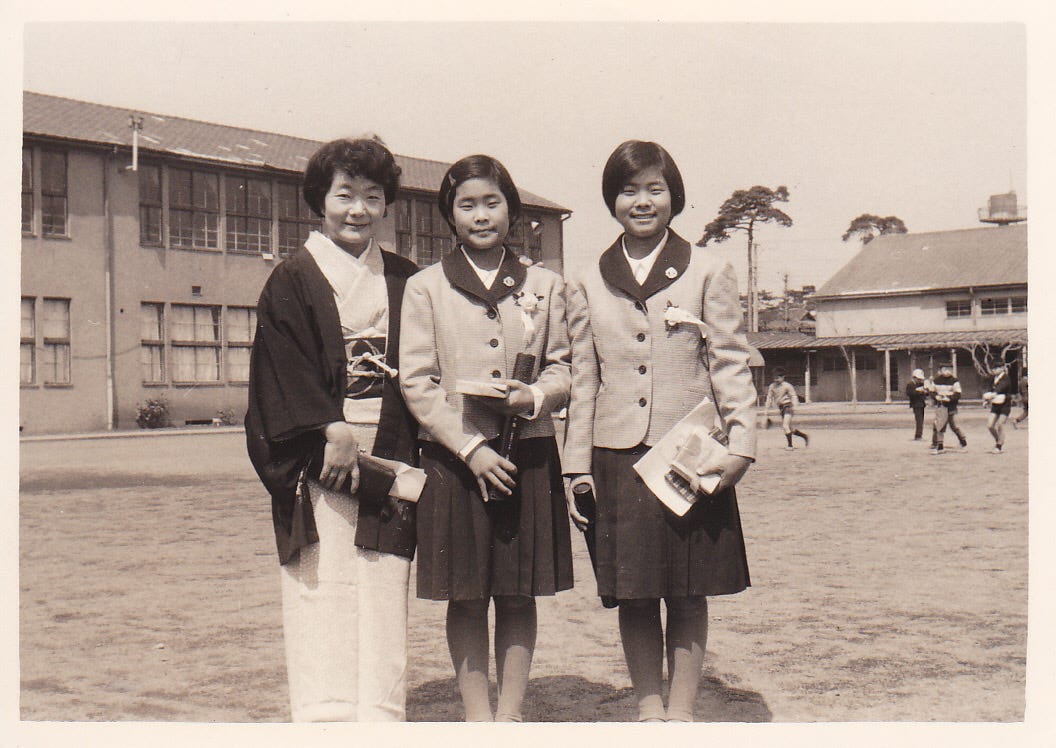
Yuki and Mariko were not so much attached at the hip as they were two misfits in a cliquish middle school. But out of a curiosity for what was happening at her old school and, perhaps, a longing for home, Yuki started writing letters to Mariko from San Francisco. At age 18, my mom and her twin enrolled in different colleges and they were separated for the first time in their lives. Throughout the loneliness and confusion of immigrating, Yuki had always had her twin by her side. Facing the cold and unfamiliar SUNY Binghamton by herself left her feeling particularly isolated and depressed. My grandparents grew concerned and suggested she visit home.
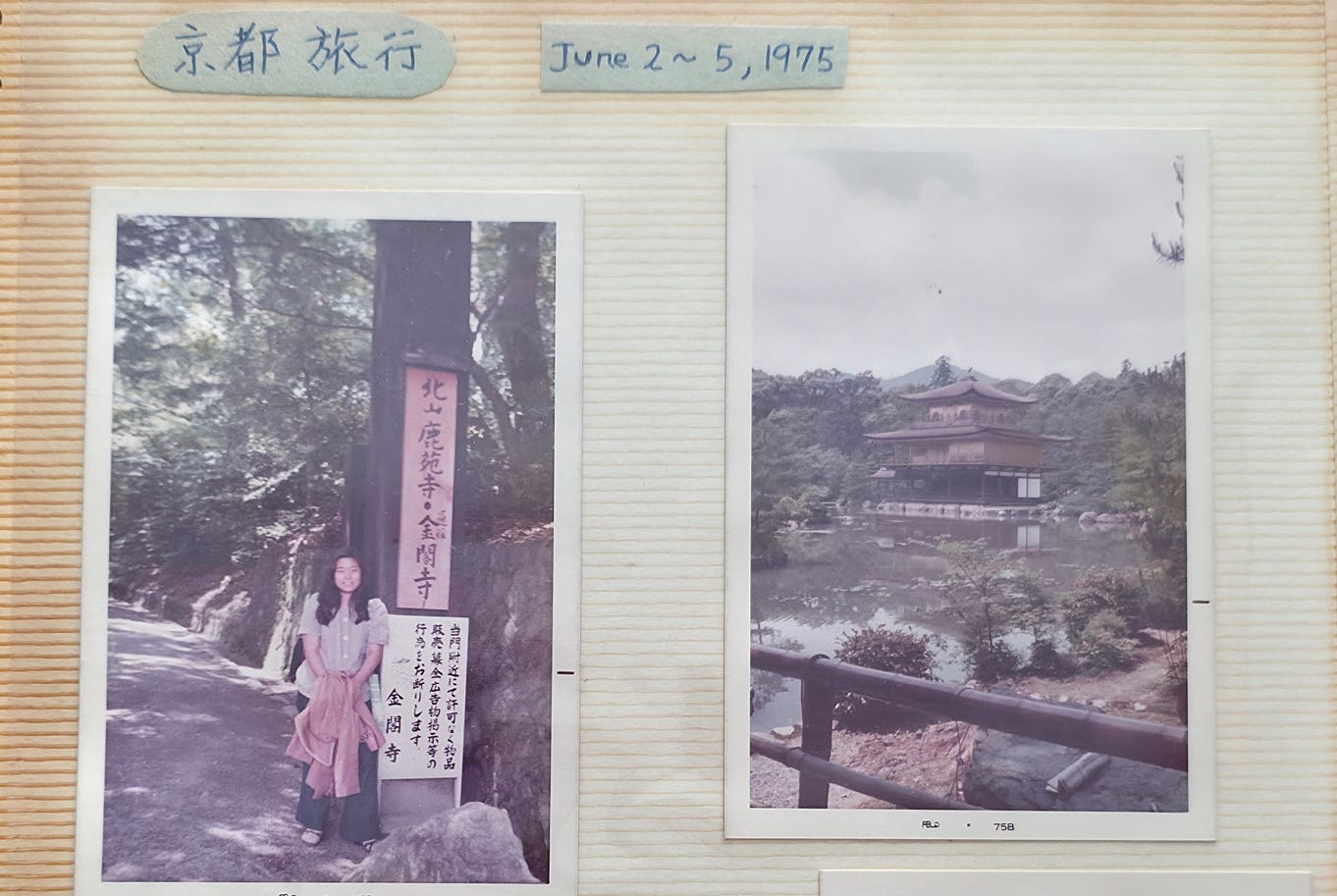
Mariko caught word of my mother’s return to Japan and planned a grand homecoming. She first arranged a trip to Kyoto, where they visited the famed Kinkaku-ji, a gold-plated pavilion situated on Kyoko-chi (“Mirror Pond”), and Koke-dera (literally, “moss temple”), which features over eight acres of garden carpeted in 120 varieties of moss. Less flashy was their visit to Ryoan-Ji, a minimalist Zen garden in which a courtyard of meticulously raked white gravel features 15 ancient stones that emerge like islands. The stones are arranged such that, no matter from which angle you view, only 14 are ever in sight. The garden was designed to embody the Buddhist principle that true understanding requires acknowledging our limited perspective. My mother was raised Catholic and recalls less the profundity of such Buddhist notions and more the overwhelming peacefulness of each location. “The moss,” she told me, “gave me a warm feeling, like a carpet.”
Mariko and Yuki then headed north to the remote countryside of Aomori Prefecture. 39 years later, I would get a job teaching English in Japan and be asked which prefecture I preferred. I randomly chose Aomori after googling “Japanese prefecture with pretty nature.” Little did I know that my mother and Mariko had visited several decades prior, and that the prefecture is likely the origin of my lineage. Our family name, “Tomabechi,” is highly uncommon everywhere in Japan except Aomori, where even a small village bears the name.


Mariko brought another friend along for the Aomori leg of the trip and my mother remembers relishing the role of third wheel; Emotionally exhausted at that point of her life and an introvert through and through, she remembers how relaxing it felt to not have to carry the conversation, to simply listen to their light banter while gazing out the train window or observing whatever monument they visited that day.
When she returned to New York, she received a package in the mail from Mariko. Inside were photos and clippings from tourist brochures so that Yuki could easily assemble a commemorative album. My mom came across that album 50 years later. Flipping through the pages, my mother says she can see through her smiles in the photographs, the pain from that time still visceral today. It moved her, remembering the lengths to which Mariko had gone to welcome Yuki back to Japan during that challenging time in life.
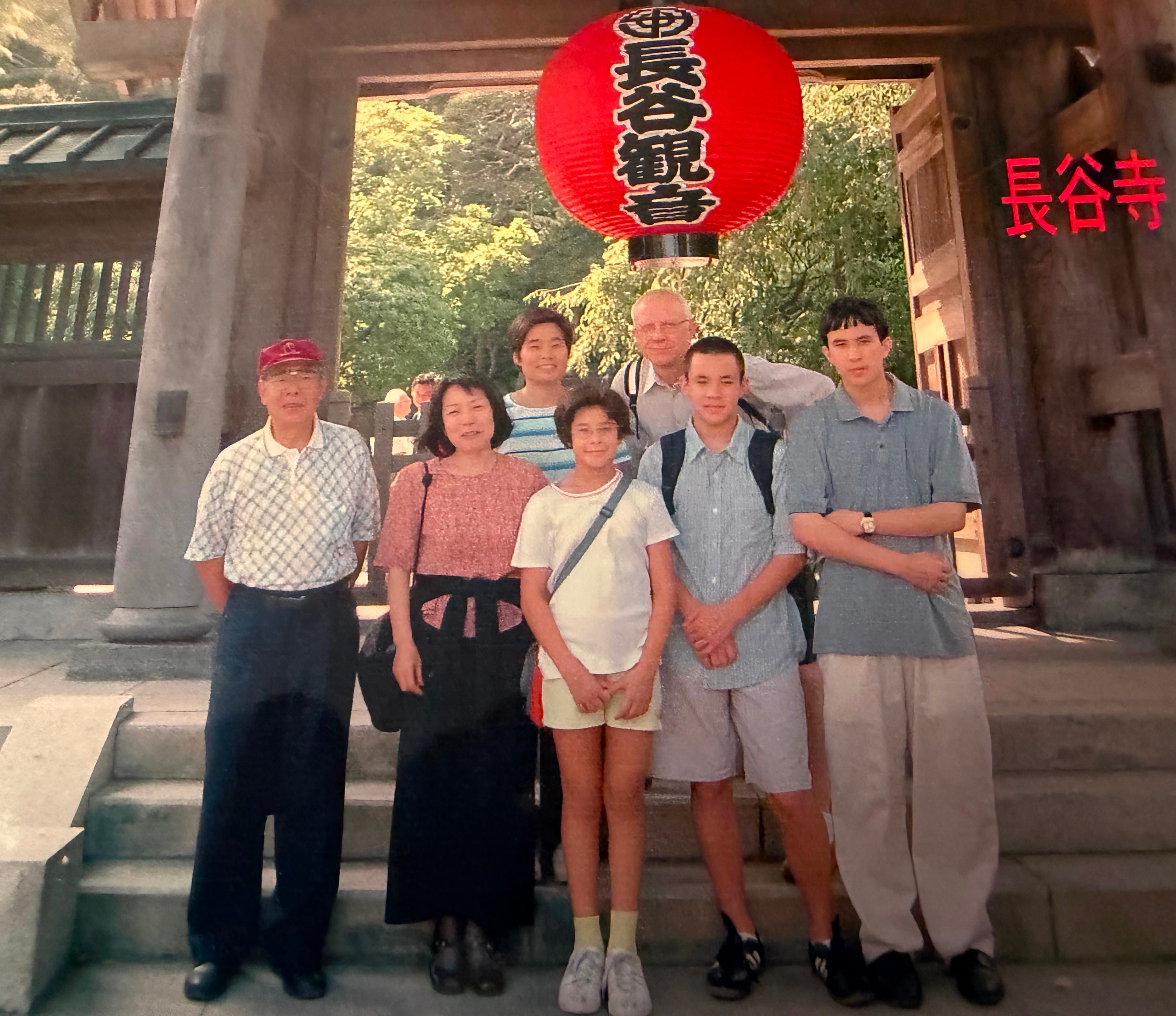
After that trip, the flow of communication petered out until it stopped altogether. Life got in the way as they embarked on their own life journeys, which took Mariko to Australia, England, New Jersey, and back to Japan with her husband and two daughters. Yuki, meanwhile, went to graduate schools in Connecticut and North Carolina before settling down in Virginia with my dad, save for a yearlong fellowship in Tokyo in 2003, with my brothers and me in tow.
Looking back on my early 20s, I remember feeling unmoored—What should I study? Who will I become? Where will I land? My mother navigated those same questions with the added complexity of no longer fully identifying with her home country and not yet entirely fitting into her new one. She remembers having clarity by the time she graduated SUNY Binghamton: Despite her parents’ wishes, and despite the challenges of her college years, she was determined to stay in the US.
I take the liberty of imagining that in 1975, returning to Japan for the first time to Mariko’s warm hospitality helped cultivate a sense of security in my mother. She learned that she could always go back, that Japan would always welcome her no matter how many years she spent away. My theory is that her trip with Mariko wasn’t just a friendly pick-me-up, which in itself is a profound gift; It might also have been a turning point that helped solidify my mother’s commitment for returning to and remaining in the US.
Regardless of its subliminal effect, the discovery of the album 50 years later reconnected them. Yuki scavenged through school directories to track down Mariko’s contact information. She sent an email reminiscing about their trip and thanked Mariko for her kindness all those years ago. Mariko responded warmly. She was happy to hear from Yuki and wrote that she, too, had been reminiscing about the past. Yuki was visiting Japan soon, would Mariko be interested in meeting up? Thus reinitiated their spasmodic exchanges.


A Sweet Reunion
Mariko informed Yuki that she now lives in a mountain town 30 minutes by train from Osaka, and that their former middle school teacher, a nun named Sister Kameoka, also lives in the area. She invited Yuki to visit Sister together, and my mom invited me.
I couldn’t believe my luck—that I would get to meet people who knew the “before” version of my mother: Before she moved to the US and learned English. Before she received four years of college and another six years of post-graduate education, worked for the US Census Bureau for 35 years, and raised three children, all done exclusively in her second language. Before she learned about the MLB or the PGA or UNC basketball and became super-fans of all three. Before she knew that there was an alternative to match-making or being a stay-at-home mother, both respectable practices, but a path she knew she was not meant to walk.
But then, radio silence. There we were, somewhere over Alaska, unsure if this meeting would happen at all. When we finally received word from Mariko, we were about to board the Shinkansen from Tokyo to Osaka. She was inflexible in her plan—only certain days and times would work—and I had an engagement, so I would unfortunately miss the moment she and my mother reunited. But to be honest, even after learning the plan I felt unsure it would come to fruition.
I was wrong. Mariko showed up as planned and spent all day with my mother. When I eventually linked up with them, there was no awkwardness, but rather a palpable rapport. They recounted their day in overlapping fragments, chatting with the easy rhythm of good friends. When I mentioned their trip across Japan 50 years ago, they burst out laughing. Mariko had no recollection of the event! Apologetic, she said she remembers a lot else about their relationship, just not their cross country tour. She humbly added that she was glad to have had such a positive impact on Yuki during that time.
I found it strange that she forgot such an elaborate trip. But then again, I haven’t lived 70+ years during which so much can happen, nor seen my country evolve from post-war disarray to post-digital age normalcy, nor raised my children in various, foreign locations across the globe. In fact, her forgetfulness of the event in contrast to the potency of it in my mom’s memory may just be an indicator of how precious that time was in the trajectory of my mom’s personal journey.
Sisters
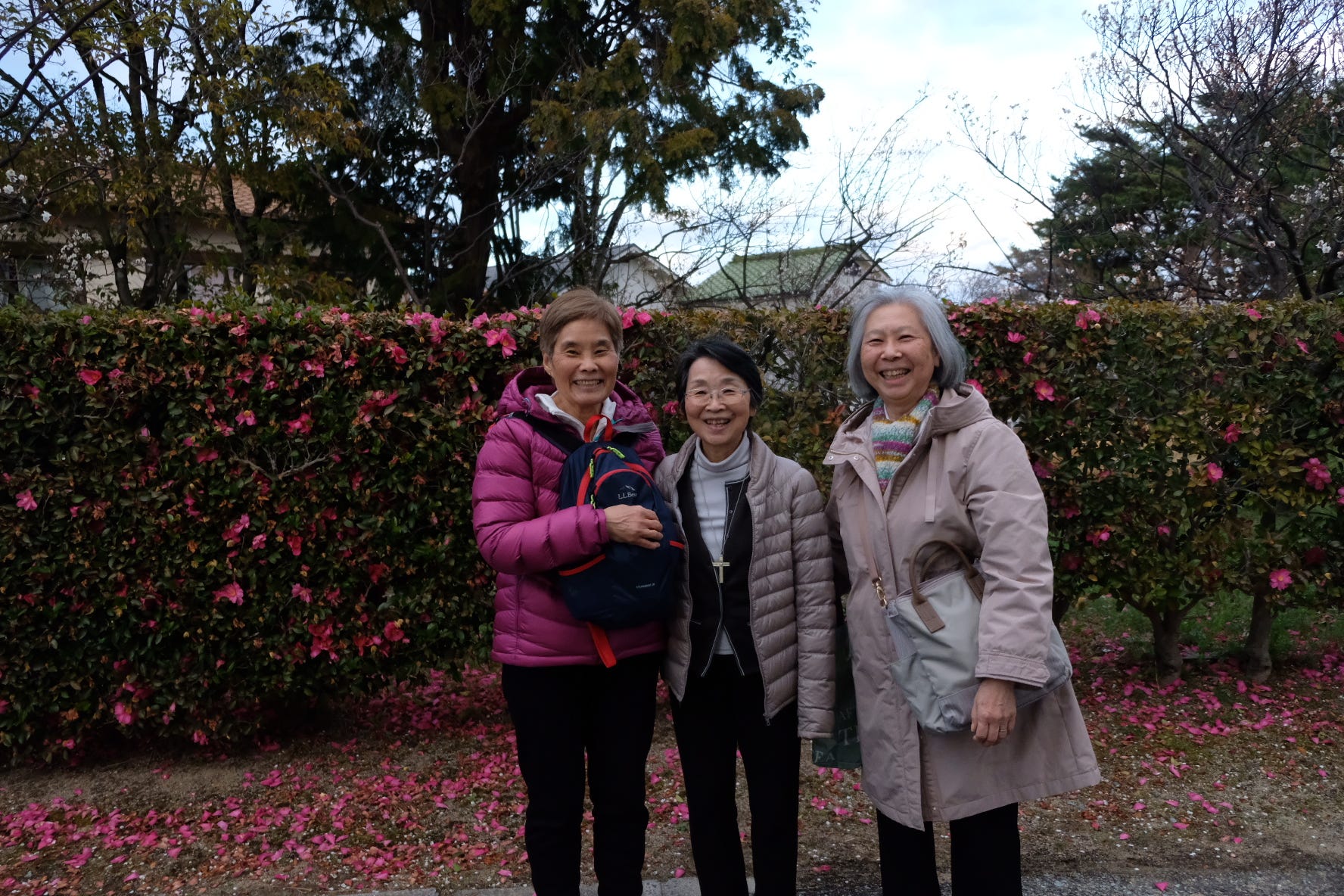
Jetlag was sneaking up on me as our taxi wound its way through the narrow streets of Takarazuka, a scenic mountain town. The weather was mercurial that day, shifting between bright sunlight and dark clouds. The taxi deposited us at the wrought iron gate of the convent and we climbed a steep driveway along a manicured garden. I remember the wind whisking fallen petals off a dazzling camellia bush and I pulled my jacket tighter around me.
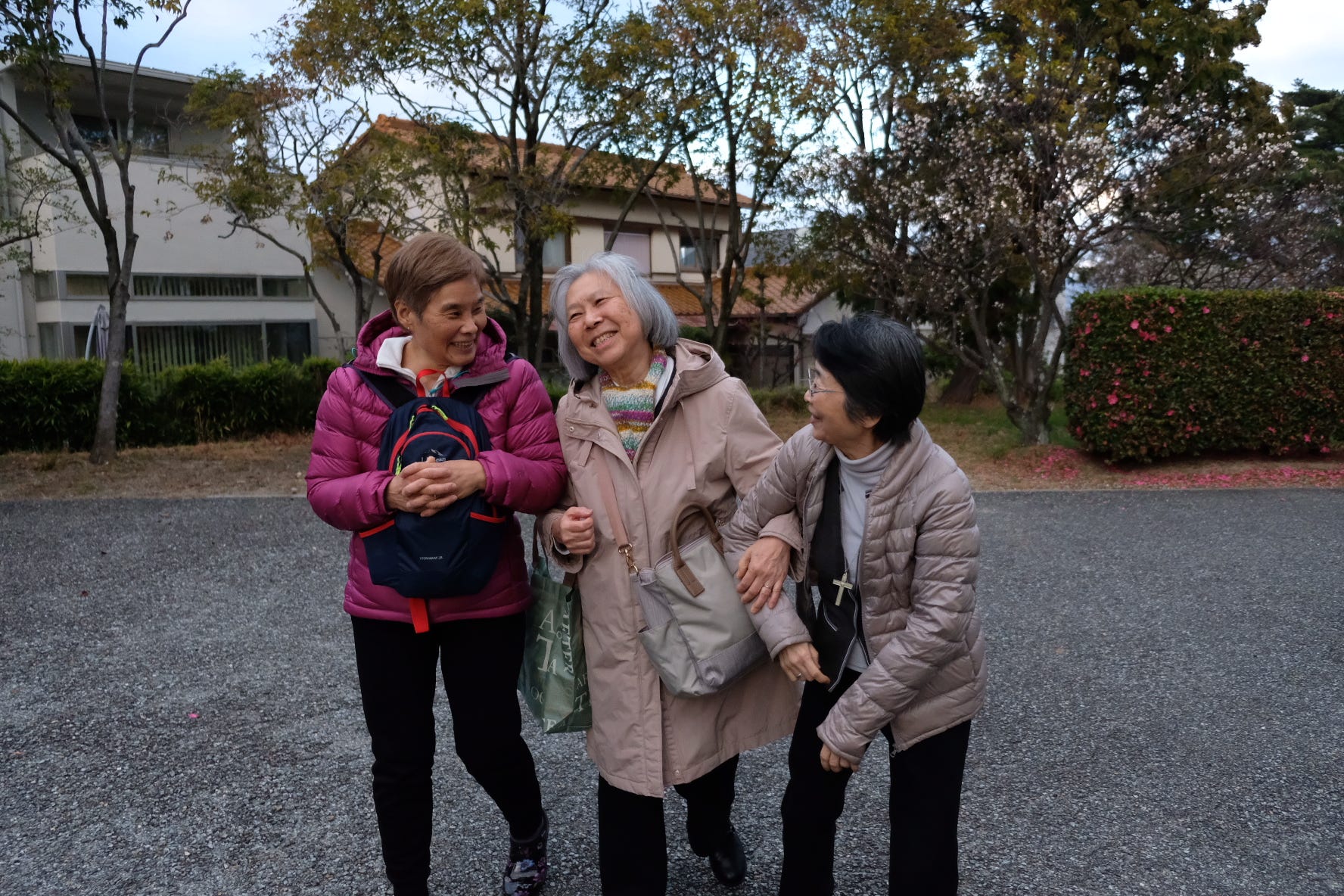
Sister Kameoka received us with such warm liveliness that I felt certain she wasn’t the one we were meeting. If she taught my mother in middle school, wouldn’t she be approaching 100? Hard of hearing? More…decrepit? Far from it, her tiny frame moved nimbly and her still-jet black hair had dashes of silver in it. We sat down in a modest living room with teacups and a snack of dates and looked out at the garden. It shone stunningly in the golden, late afternoon light. I had an urge to pull out my camera to photograph it and take candid photos of Yuki, Mariko, and Sister Kameoka, but I didn’t want to be intrusive.
Instead, I staved off the jet lag by tuning my antenna to better understand their rapid Japanese. It was difficult to follow the nuances of their conversation and I noticed both Mariko and Sister Kameoka slow their speech and turn to me to make sure I felt included. Sister Kameoka described joining the convent shortly after graduating from college in the 1960s. At that time in Japan, and especially in a Christian setting, English was highly regarded and all Sisters in the convent were expected to be fluent. Sister Kameoka was chastised by her elders for her ineptitude at the language. Even now, she remarked in Japanese, she struggles with English. I could feel that she sensed my embarrassment for not being fluent in Japanese and I greatly appreciated her relating to me in that moment. I felt touched more generally by her engagement with myself, Yuki, and Mariko; Retired from teaching (though still a guidance counselor for troubled students), she still possessed energy, genuine curiosity, and enthusiasm for her former students.
The conversation as a whole was remarkable to me. To hear them draw connections between their wide-ranging experiences was a type of conversation I have never had, nor could I if I wanted to—I’m only 34 and they’ve lived over twice my age! For example, Sister Kameoka was diagnosed with cancer at age 32, and again with a different type of cancer in her 50s. She listed her diagnoses as a matter-of-fact, as though they were simply bullet points in her life. Those years battling cancer must have been grueling, uncertain, and impactful to her worldviews and relationship with life. But there were so many other things to discuss besides her now-decades old cancer diagnoses!
Instead, she elaborated on the evolution of her students’ behavior patterns over the years and explained how nuns, who rotate convent locations every few years, must re-learn how to coexist with a new cohort of roommates every time they relocate. Mariko related in having moved to three foreign countries, and how her daughters, similar to Sister Kameoka, had to re-adjust to their new circumstances each time. Mariko elaborated on her responsibilities as a shufu (literally, “master woman”) in which she tirelessly managed their household, the development of her children, supported her husband in his business endeavors, and beyond. My mom, for her part, could relate in having two sisters who also took on the demanding role of shufu, as well as in the contrasting shape her own life took, in which she became an American office worker.
I felt like I was witnessing some kind of historic conversation that would be later transcribed in textbooks. Actually, this was the stuff historical films and school textbooks are missing: the profound, lived experiences of remarkable women.
It was all so fascinating, watching their complex, winding lives play out in front of me over the course of three hours. They were once three, young women living in a tenuous, post-war order. They had dreams and they had uncertainties about the future. It was like they blinked and—in that brief moment when their eyes shut—years passed, children were born, lives were lived. And when they opened, here they were, old women, telling me how it all plays out.
Towards the end of the conversation Sister Kameoka positioned her body to face me. She held my hands in hers and asked, “What are your interests? What dreams do you have for your life?”
Counting the Stones
My dream in life has shifted and morphed in my short life thus far. At one point it was to be a world-famous actor. At another point, a filmmaker more generally. At the moment, I’m keen on finding Home, on cultivating creativity, on nurturing relationships important to me. Nothing is for certain and I acknowledge my limited perspective. I think I’ll find myself lucky, though, to reach an age where I’m able to look back on my life with more clarity. Where I can see how it plays out, all the ups and downs, dashed dreams and unexpected wins, and say—with a perspective I don’t have now—how many stones there are in my garden.
Hi ☺ I’m Emi, a writer / filmmaker / artist who takes special delight in observing uniqueness in people, nature, and food. I write stories about daily life as a nomad, meditations on heritage, and my annual visits to Japan. 📍 Currently bouncing up and down the East Coast.
At the moment, my work consists of bringing a feature film to life with a treasured group of collaborators, auditioning for and occasionally booking tv/films/commercials, and sharing about my life on Substack and TikTok.
I love connecting through shared creativity + curiosity, and I am averse to advising people on what to do or making art for the sole purpose of clicks. Thanks for joining me at My Temporary Address.
Love reading your story and yes — so many of us are trying to find the meaning of "home". Great to connect with a fellow Asian writers! Hope you enjoy my stories too! 🫶🏼
What an honour to read such an intimate and beautiful text!