


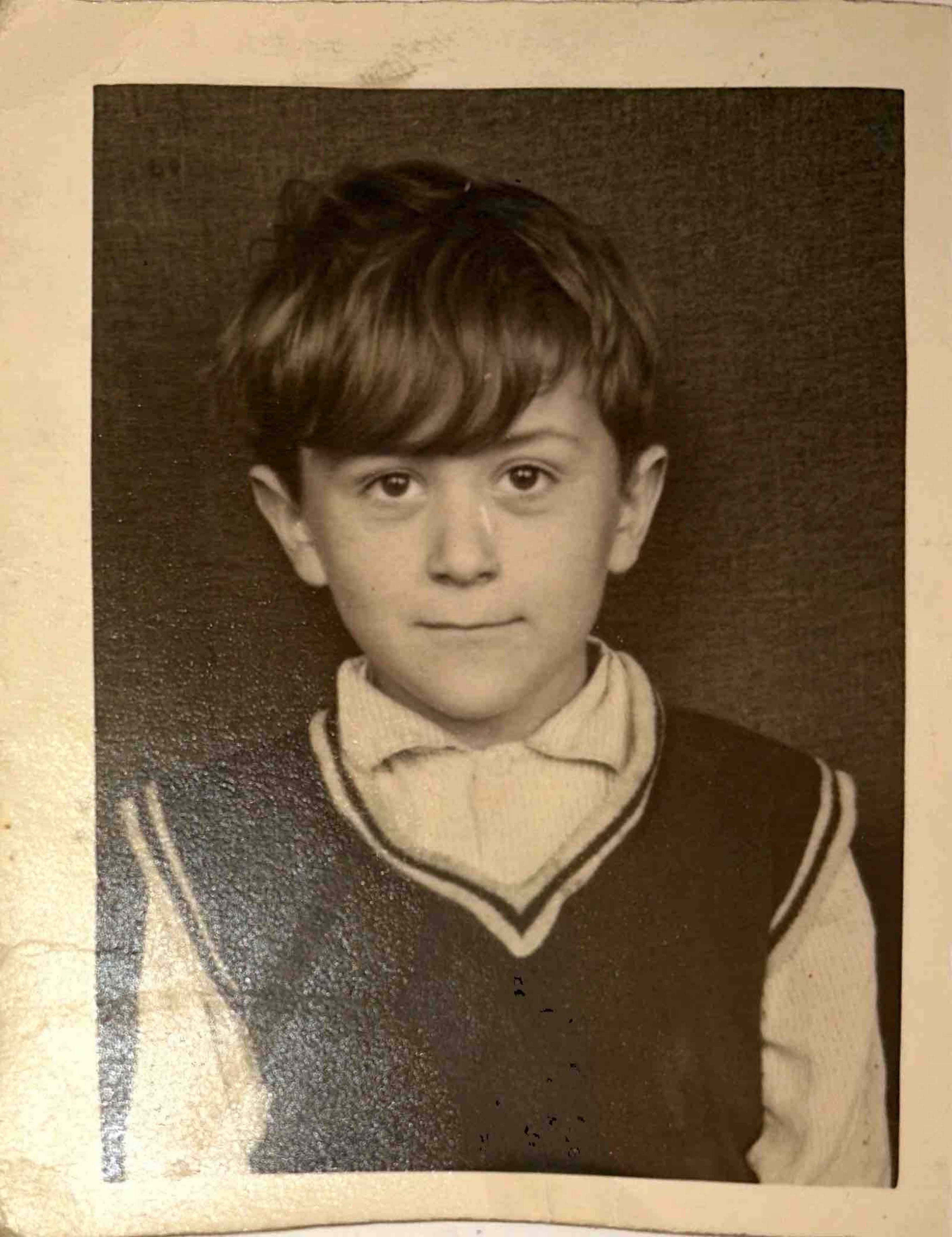
My father-in-law Harry was 15 when his native England won the World Cup. He watched the 1966 final against West Germany on a tiny black-and-white TV propped up in the concrete hearth of his family’s cramped living room. His siblings—two brothers and two sisters—weren’t as interested in the match. Nor was his boilermaker father, who was always either working or at the pub, or his mother, who was too busy managing the household to indulge in such a pastime. Harry, meanwhile, found soccer to be a bright spot in his otherwise gritty and hardscrabble neighborhood of the Isle of Dogs. At age 15, after watching England win the World Cup, Harry began to dream that maybe he could one day be a professional soccer player.
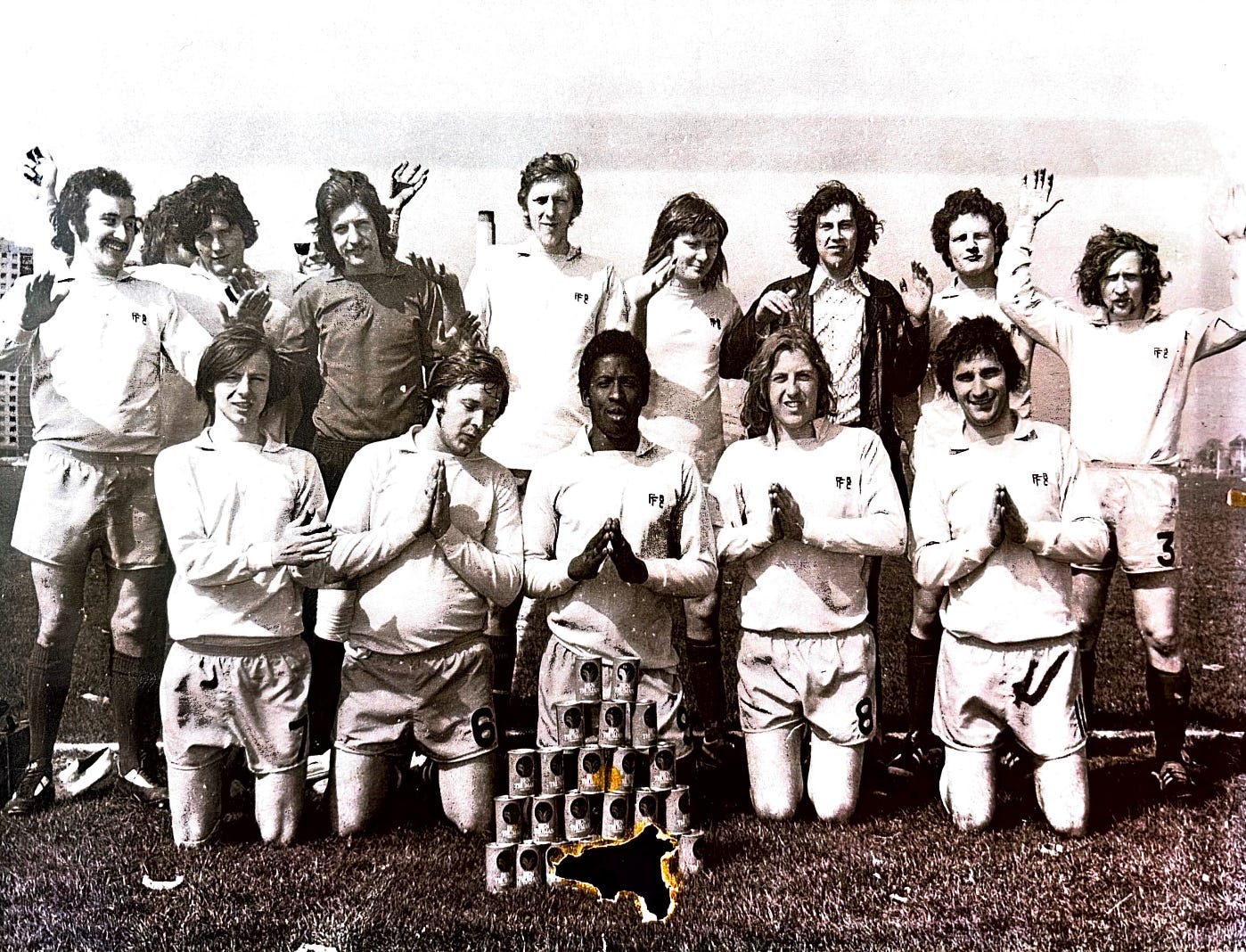
The Isle of Dogs, nestled between the curves of the River Thames, is in the East End of London, and was known at the time for shipbuilding, organized gang violence (of which the notorious Kray twins became the face), and being the cultural cradle of soccer hooliganism. The typical path of an East Ender was to get a manual labor job, preferably one that did not expose them to asbestos, at age 15. Eventually, they might get married and start a family in a two-bedroom apartment, like the one Harry’s family of seven lived in. If they were lucky, they might even upgrade to a coveted upstairs three-bedroom. “People didn’t aspire to own a house where I’m from,” Harry explains in his cockney accent. “I never, ever thought I would own a house.”
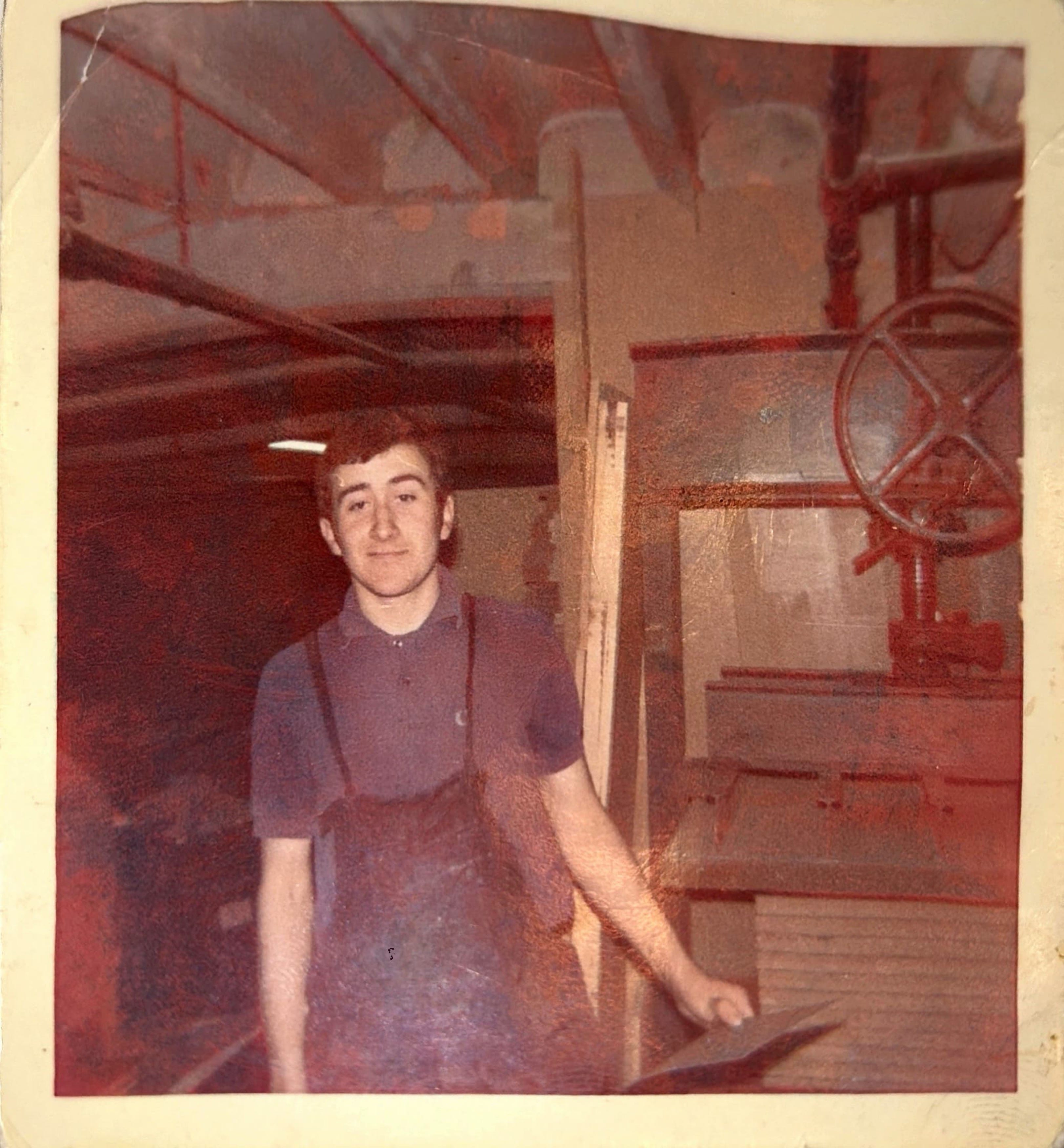
He would, though. In his mid-twenties, he would tag along with fellow Englishman Teddy Thake to the United States. They would catch odd jobs along the coast of California, wait tables in Albuquerque, narrowly escape drunken bar fights in Florida, before ending up in Northern Virginia, where Harry would meet his future wife. Teddy would eventually return to England for good, but Harry stayed. He and his wife would eventually have three children and raise them in a 3,000+ square foot home in the well-to-do suburbs of Washington, D.C. It was a life he could have never dreamed for himself, made possible, he once told me, because “America is the best country in the world. That is my opinion.” And yet, every four years when the World Cup returns, it’s always England he roots for.
Before Harry’s world expanded beyond the Isle of Dogs, his focus was soccer. A talented athlete, Harry was nominated by his high school, along with classmate Mickey Champion, to try out for a coveted spot on the West Ham United youth team. West Ham United was a shiny beacon in the otherwise grim, post-war East End. The club skyrocketed to fame because, as people often say, “West Ham won the ‘66 World Cup.” Three star players of the English national team—Bobby Moore, Geoff Hurst, and Martin Peters—all played club for West Ham, making the two teams virtually synonymous. West Ham was, in other words, the pride and joy of the East End, and Harry had a shot to train with them.
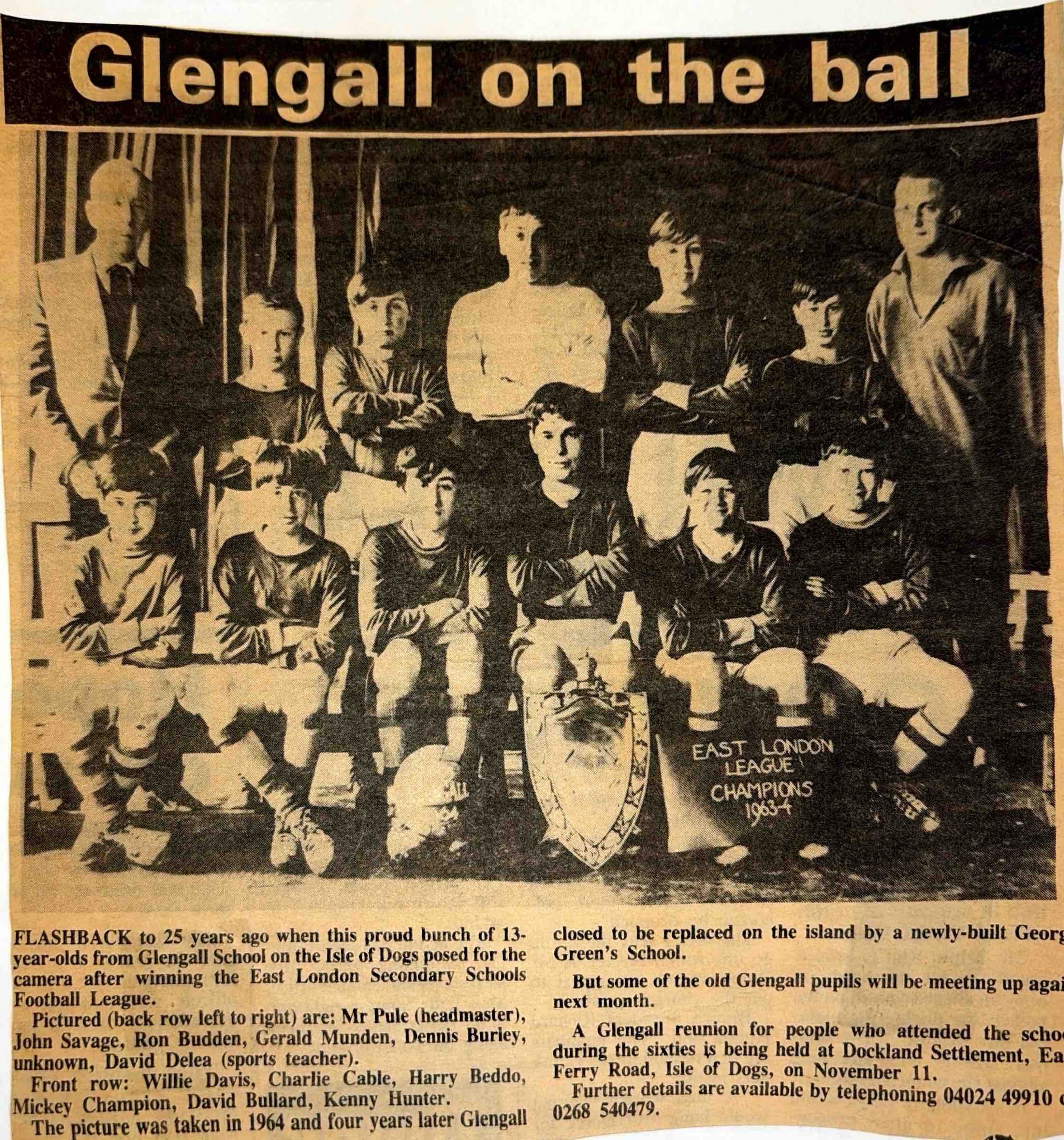
He and Mickey were invited to the training grounds at Chadwell Heath, where the youth team still trains today. They were tested against the area’s very best male athletes on foot skills and sprints, and played in an 11v11 scrimmage. It became immediately apparent that he and Mickey were in the middle of the pack. “The best ones had it all: athleticism, ball control, jumping,” he recalls with his arms crossed over his chest. “I knew I wasn’t that good. They wasn’t that impressed with us.”
The failed tryout didn’t discourage him, though. Soccer had started out for Harry as a casual playground game, and then evolved into a loosely organized afterschool activity. To receive insight from a top institution with resources like West Ham was a gift: It showed him what his level was and where he needed to be, because there was never a question about whether he would continue playing. He went on to play for local club teams and would continue that way, even after relocating to the United States, until age 48 when his knee gave out. For Harry, a job has always been a way to pay the bills. Soccer is what he lives for.
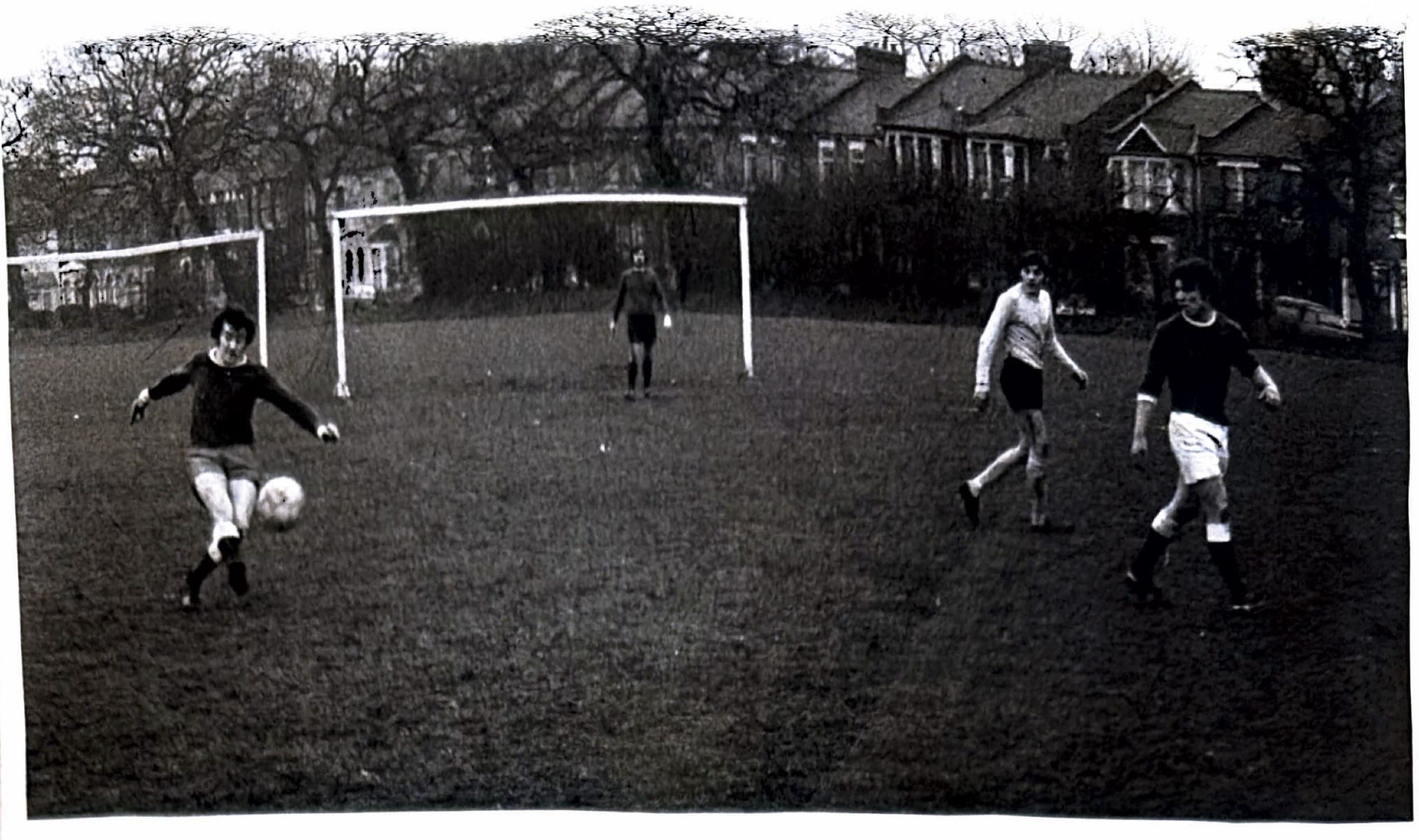
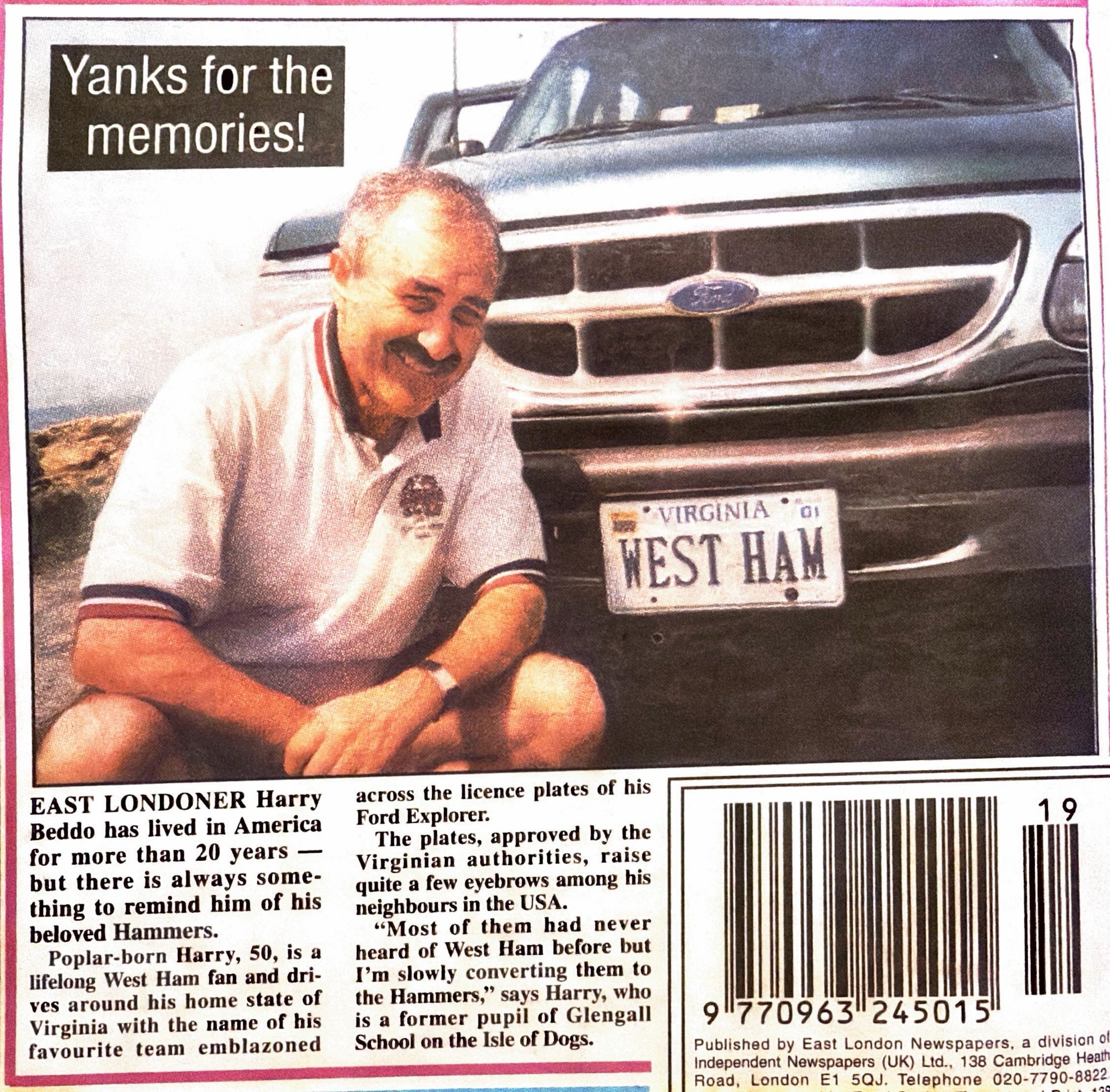
Neither did the failed tryout diminish his loyalty to West Ham and the English national team. To this day, his license plate reads “WESTHAM,” which occasionally garners friendly honks from fellow English Premier League fans. Most of his t-shirts and hats proudly sport the West Ham or English national team logos. His devotion is even reflected in his children and grandchildren, who support West Ham with a cult-like ferocity. Every weekend, the family schedule revolves around when the EPL is broadcast on NBC. Before it was available on American cable, they watched on pay-per-view. And before that, dating all the way back to the early ‘80s, Harry listened to EPL scores on his neighbor’s shortwave radio.
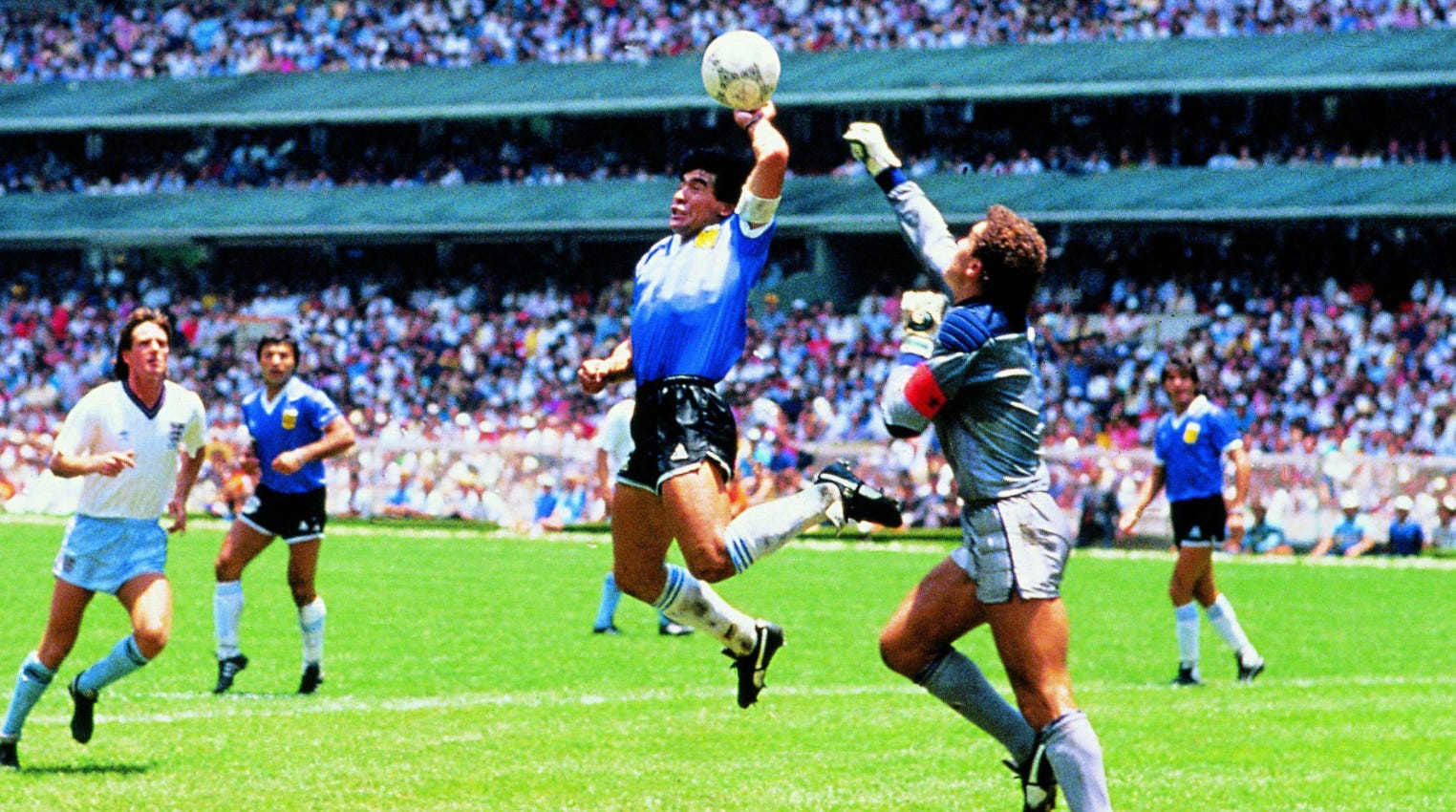
But being an English soccer fan in the intervening years since ‘66 has not been easy. The nation’s hope for another World Cup has waned with each successive tournament, as misfortune after misfortune seemed to befall them. Perhaps the most famous endured trauma was the 1986 quarterfinal against Argentina at Azteca Stadium in Mexico City. Football superstar Diego Maradona notoriously punched the soccer ball into the net with his fist. The referee, unsighted, allowed the goal to stand. The moment, now referred to as “The Hand of God,” helped Argentina to win the game 2-1. They went on to win the whole tournament.
West Ham, too, has let down its fans over the years. Most recently, the team performed so poorly that they were relegated out of the EPL and into the lower division. Yet fan loyalty remains steadfast. Out of all 20 teams in the EPL, West Ham home game attendance was second only to Manchester United last season. Similarly, Harry can’t stop supporting his team, no matter how many times they lose, no matter how high his blood pressure climbs while watching them play. After their recent relegation, he announced to the family that he will not be following the team next season, to which we all rolled our eyes. Sure enough, he let it slip a week later that West Ham’s first match of the season will be against Burnley F.C.
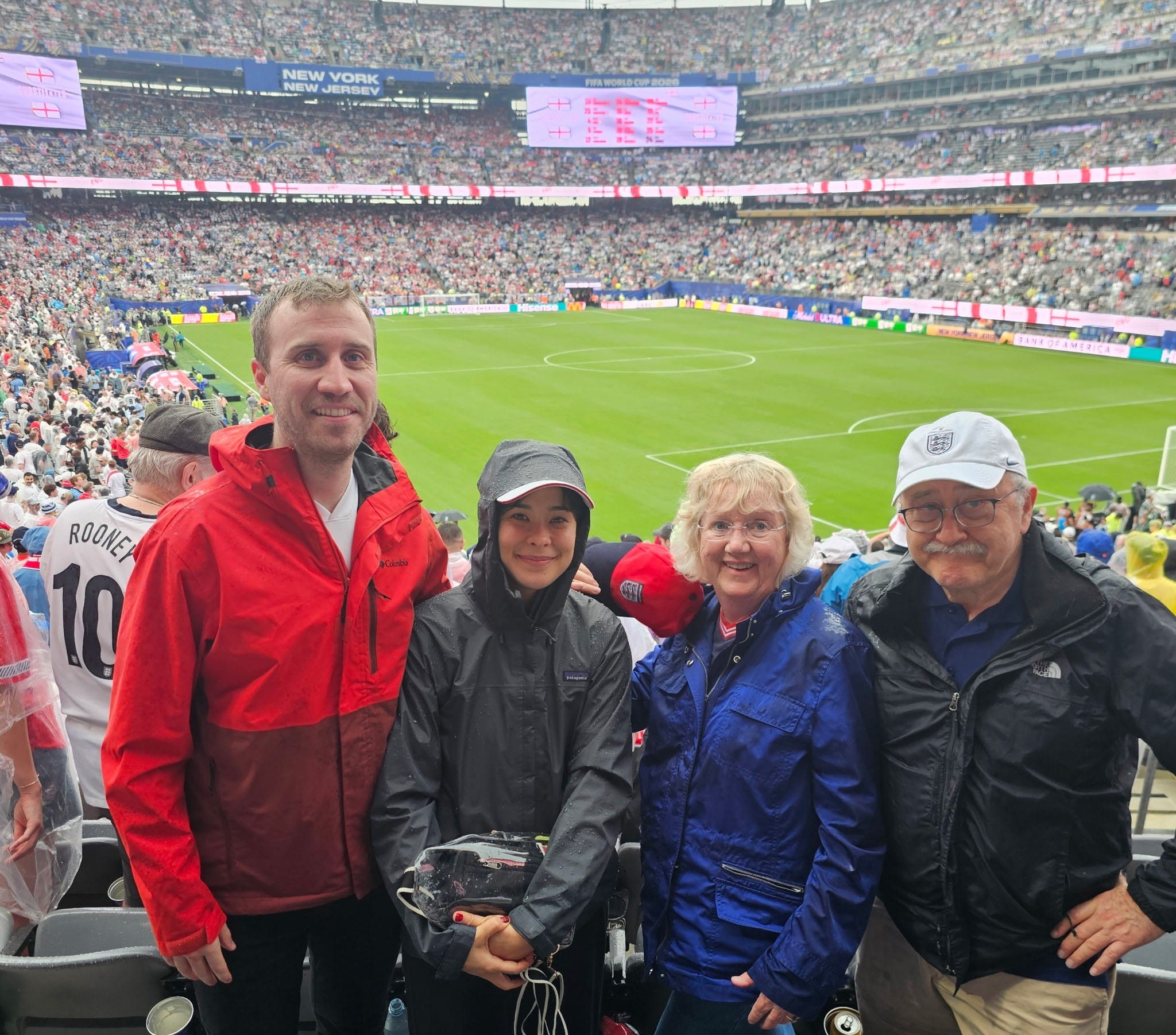
The longing for England to finally win another World Cup and for West Ham’s return to glory has played out like an unrequited love. Which explains why, when my husband announced that he had secured tickets for us to watch England play Panama at the 2026 World Cup, Harry responded, half-serious, that he would offer his ticket up to someone else. Of course, he didn’t. It rained hard the day of the match and Harry, now 75, had no problem standing in the rain for two hours to watch his beloved team play. And just as bickering lovers might do, he chided, “I know they can be better.” He downed his beer before adding, “People paid money and come all the way from England to watch this nonsense.” My husband and I withheld laughter, knowing very well the pain he’s endured all these decades in hopes that his team would deliver.


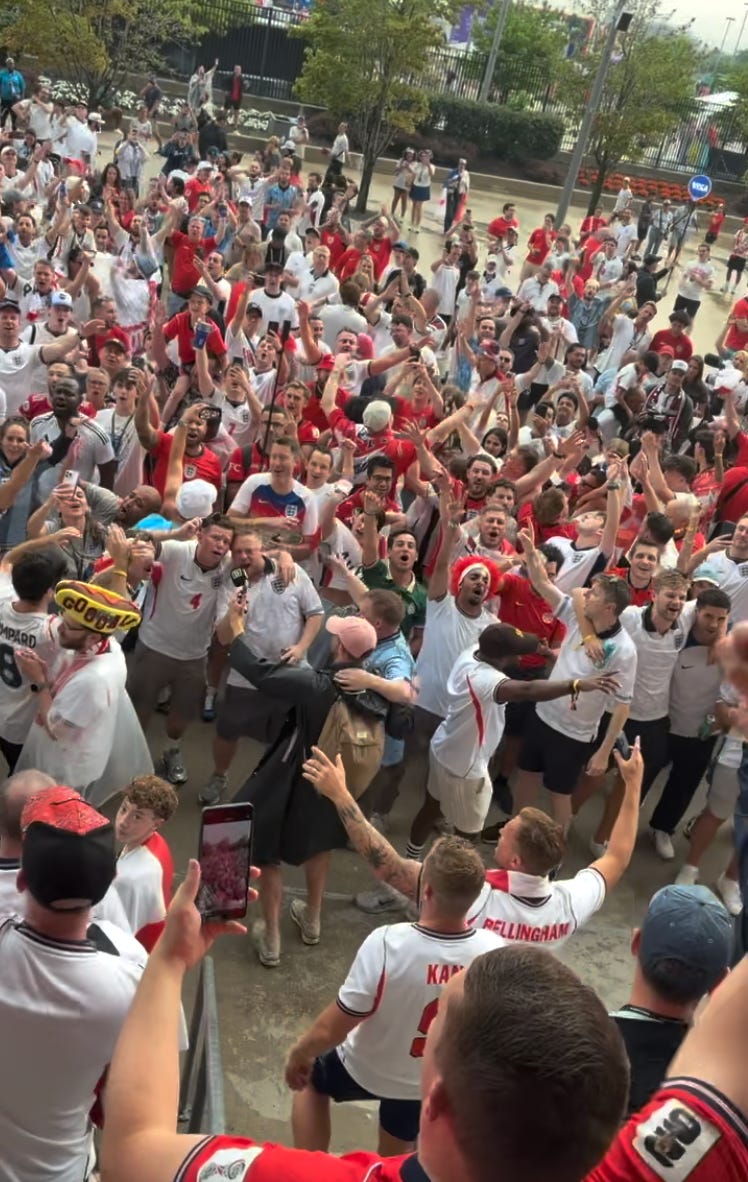
After the scoreless first half, England came out in the second half with renewed intensity. We stood behind the goal as superstar Jude Bellingham redirected a corner kick into the back of the net. And then, five minutes later, the net rippled again when captain Kane headed the ball off a cross. All of Harry’s halftime frustrations and worries evaporated. “That was special,” he said of watching England’s two star players score right before us. After the game finished, the England squad walked to our end of the field and stood before us as tens of thousands of England fans serenaded them with “Wonderwall” by Oasis.
The long walk out of the stadium was equally festive with singing, banging drums, and conviviality. In the men’s bathroom at the urinals, my husband told me, the drunk England fans on either side of him sang in unison about how head coach Tuchel will lead them to victory: “Football's coming Home again, with Thomas Tuchel, one, two, three, four…” And descending the stadium stairwell, the songs seemed only to grow louder. As we turned the final corner, England fans stood there welcoming us with their hands in the air, singing, “Don’t take me home / Please don’t take me home / I just don’t want to go to work / I want to stay here, / And drink all your beer / Please don’t, please don’t take me home!”
I thought watching England play at the World Cup in person—something Harry had never done until now—would be the highlight of this tournament. It wasn’t. A week later, England was to play host country Mexico at the Azteca Stadium, the very place the English say the Cup was stolen from them by the Hand of God in 1986. Mexico would have home team advantage with 73,000 fans behind them to England’s estimated 15,000. Furthermore, the Mexican team, unlike the English team, was well adapted to the 7,200 foot altitude of the stadium, where there is 23% less oxygen in the air than at sea level.
Harry, my mother-in-law, my husband, and I gathered in the living room to watch the match. Thunderstorms bookended the continent that evening: one fading over our house with the sunset, the other delaying kickoff at the Azteca by an hour. We watched the English bus slowly make its way through a crowd of booing Mexican fans, who spray painted and threw eggs at the team bus. We were nervous. The match started at an incredible pace. Both teams were running hard and muscling each other off the ball. One of us wondered aloud how long this intensity would last; it couldn’t, for long, could it? Not at this altitude.
The din of boos that rang out every time England had possession made our TV vibrate. Early on, Mexican forward Raul Jimenez rocketed a diving header that surely would have gone in, had English goalkeeper Jordan Pickford not fully extended his body and fingertips to save it. I turned around to Harry and asked if he was alive. We took a deep breath together. Mexico was using the altitude to their advantage, dominating possession 63% to England’s 37%. But in the 36th minute, Jude Bellingham dove across the pitch to head a cross into the back of the net. Two minutes later, a Mexico turnover led to yet another Bellingham goal, silencing the whole stadium. The two-goal lead took the edge off, but only momentarily, because Mexico earned a goal back four minutes later. Thanks to another clutch save by Pickford, England headed into halftime with a 2-1 lead.
If the first half was nerve-wracking, the second half was a white-knuckle ride. Somehow, both teams were maintaining the fierce energy output of the first half. When suddenly, English player Jarell Quansah took the physicality too far, earning him a red card. England would have to finish the remaining 36 minutes plus stoppage time a player down. Despite this, England went up 3-1. Things were looking positive, until the tide seemed to shift yet again in Mexico’s favor. They were awarded a penalty kick. 3-2. England was starting to slow down. Players were tired. Even the heroic Jude Bellingham stopped chasing down balls, exhausted as he was. The whole stadium was behind Mexico, cheering them on to tie it up. The referee generously awarded over twelve minutes of stoppage time. Two yellow cards were handed out, one apiece to Mexico and England. Mexico bombarded England with five nail biting shots, but none of them went in. The sweet whistle blew.
England had won 3-2. Players on both sides dropped to their knees, utterly spent. Shots of Mexican fans with tear-streaked face paint played across our screen. I turned back to look at Harry. He had his chin in his hand. At first I thought the TV was reflecting funny off his glasses. Then I realized: “Are you crying?” He didn’t answer, just wiped his glasses clean. A few minutes later he said, “Now I can die.”
The England team walked over to the fan section and, as we did at the Panama game, the fans serenaded them with “Wonderwall.” Except this time, the players stood in a line, hands wrapped around each other’s shoulders, and serenaded the crowd back. It was an unbelievable moment of unity. This team, against the odds of altitude and a historic curse, had won at the Azteca Stadium at the World Cup.
As I write this, England still have three more matches to survive if they are to finally hoist the Cup. And as any soccer fan knows, each of those matches will be its own Everest of a challenge. With the US and Japan eliminated, I have no one left to cheer for but England. But truth be told, having married into this soccer-manic family, and having learned Harry’s life story of love and soccer, I secretly would have been rooting for them anyway, for England to finally Bring it Home.
Hi ☺ I’m Emi, a writer / filmmaker / artist who takes special delight in observing uniqueness in people, nature, and food. I write stories about daily life as a nomad, meditations on heritage, and my annual visits to Japan. 📍 Currently bouncing up and down the East Coast.
At the moment, my work consists of bringing a feature film to life with a treasured group of collaborators, auditioning for and occasionally booking tv/films/commercials, and sharing about my life on Substack and TikTok.
I love connecting through shared creativity + curiosity, and I am averse to advising people on what to do or making art for the sole purpose of clicks. Thanks for joining me at My Temporary Address.
Harry swearing off West Ham after every relegation, then letting the opening fixture slip a week later, is such a precise picture of loving something that keeps letting you down. You keep him funny and stubborn all the way through, the WESTHAM plate, two hours in the rain at 75, so when he goes quiet and says now he can die it doesn't need underlining. Sport as the unrequited love that outlasts the ones you chose is a sharp thing to have caught in your own family.
Once again, a very compelling piece.
I have to admit that I have a love-hate relationship with soccer. I enjoy watching the games, but I can never quite forget the negative excesses of soccer nationalism or the statistics on rising violence against women after soccer games. Especially as a German, I grew up knowing just how destructive nationalism can be, which is why I tend to root for the underdogs rather than for my home country or the big favorites. But I also see that people who belong to a diaspora, in particular, enjoy seeing their home countries on the big stage.
Of course, your text is only tangentially about soccer. At its core, it’s yet another empathetic portrait of someone close to you. You really have a talent for bringing these people to life in your writing. I hope you’ll be able to experience the World Cup together many more times! All the best to your father-in-law! <3