


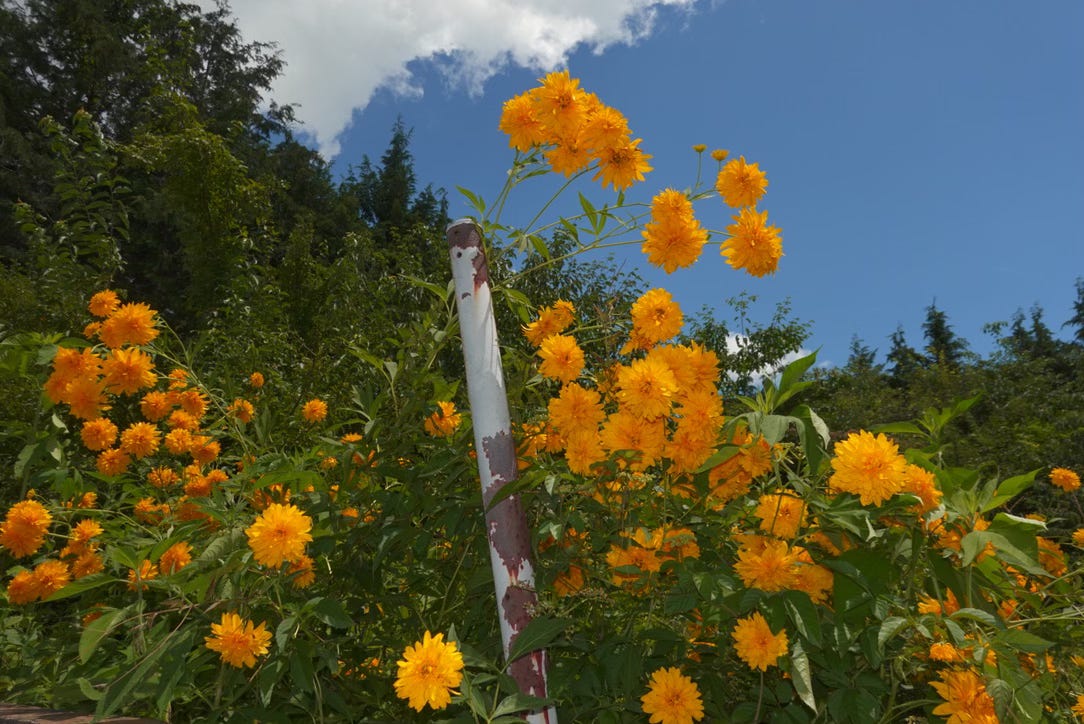
One of my top hopes for this trip to Japan was to hike in Kamikochi, an alpine haven of turquoise rivers and lush fir. My mom connected me to her friend, Kazumi, whose family home sits a 2 hour drive from Kamikochi in the southern alps of Yamanashi Prefecture. Kazumi-san breezily bridged the inevitably awkward e-meet with warmth and invited me to watch an annual fireworks show near her home before joining me for a thru-hike in Kamikochi two days later. I was thrilled. Not only was I unsure of how to navigate the trail system in Japan (AllTrails only works in certain locations), I was excited to have someone to share the memory with.
In the lead-up, I anticipated that the visit to Yamanashi would be a fun preface for the main event, Kamikochi. It was a subconscious feeling that only became apparent after both events concluded and when, in reflecting for this post, I realized that my time in Yamanashi holds equal weight in my memory.
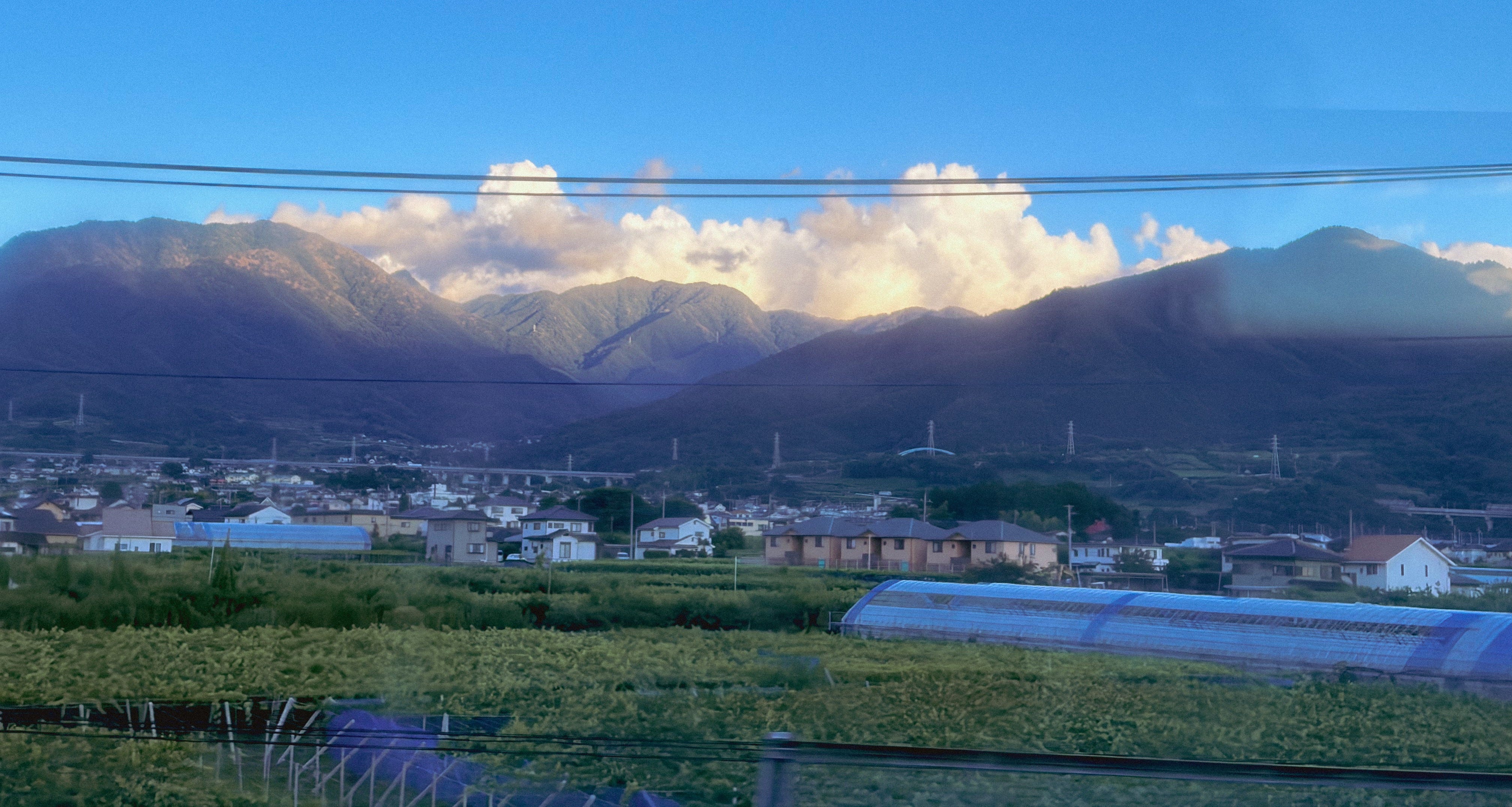
Kazumi-san arranged everything ahead of time so that from the moment I stepped off the direct bus from Shinjuku Station, everything felt seamless. Except for recognizing her at the bus stop.
The only picture I had seen of her was from a cross-country motorcycle caravan she participated in, her helmet obscuring her face, and I knew she was about 15 years younger than my mother. Which is why I looked right past the woman walking toward me who appeared to be 40 years old and spoke in a gentle voice. I don’t know what a Japanese Harley Davidson biker lady looks like in real life, but perhaps that was what I imagined. I would soon learn that Kazumi-san doesn’t fit into any particular stereotype: She’s a city woman (born and raised in Tokyo) who now part-time runs her rural family farm; she’s a statistician who works an office job, and also climbs mountains and rides in motorcycle caravans; she’s Japanese in her politeness and hospitality, and she speaks fluent English and conversational French. Conversation flowed with her naturally and easily, like we had known each other before and were just catching up.


The first night, she prepared an elaborate chicken dish with vegetables stewed from her own garden, and bread she had baked herself. Then she took me to the town hot spring bath, or onsen. Outside the building, the tennis courts were lit up, the sounds of feet scuttling back and forth echoing across the packed parking lot. Inside, families licked post-bath popsicles in the lobby and brushed each other’s hair with fraternal familiarity. The bath itself felt like a peek into daily countryside life; I could tell that these families frequented this place by the way mothers shampooed their toddlers’ hair and school-aged girls chatting in the bath seemed to know each other like cousins or classmates.
The second day was for the barbecue and fireworks.
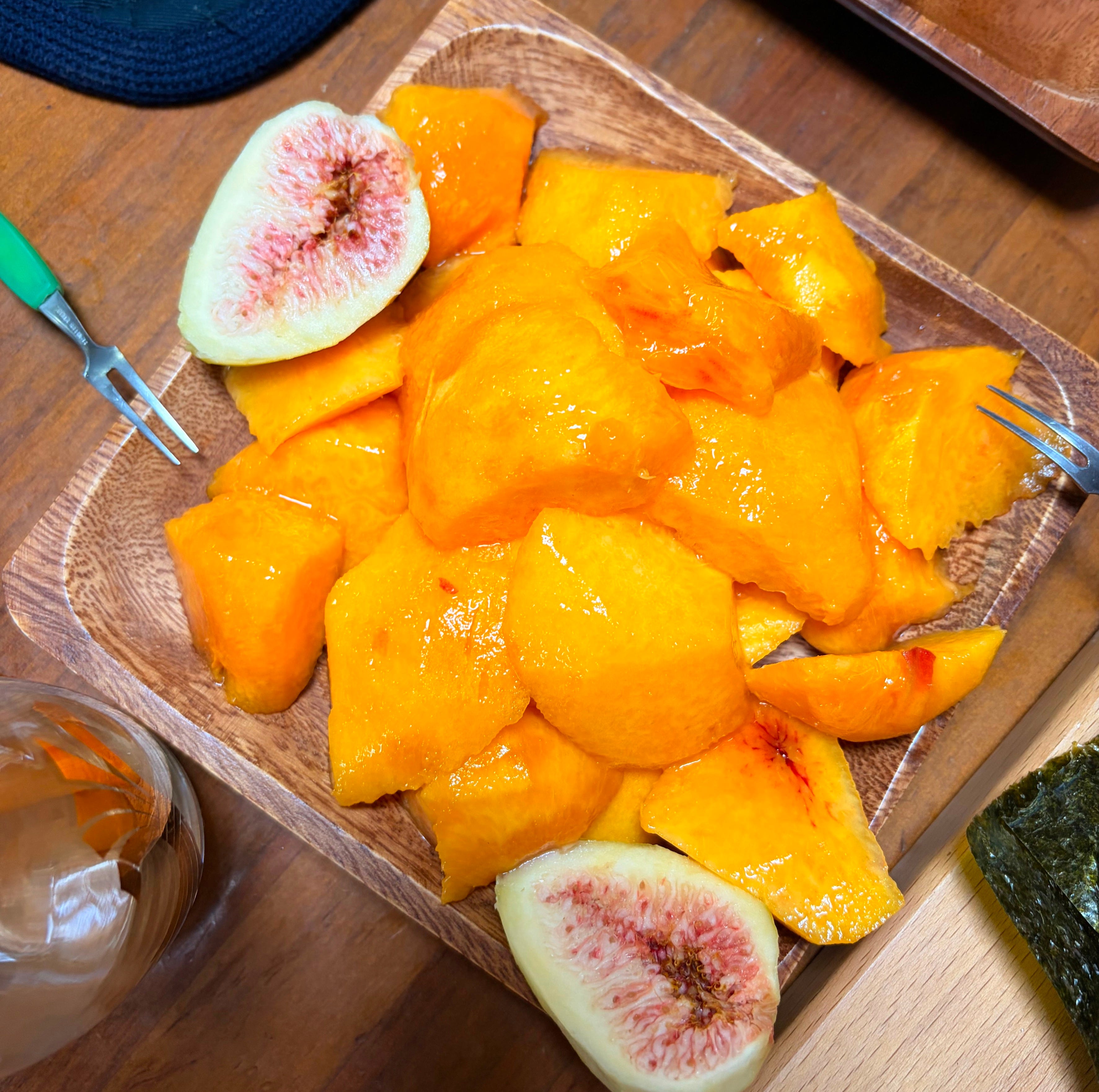
Yamanashi literally translates to “mountain pear,” but is ironically known for its peaches. I luckily happened to visit during peak peach season. After unloading giant grapes, vegetables, and seafood purchased at the farmer’s market in her fridge, Kazumi-san chauffeured me to her town’s “michi-no-eki,” or a sort of marketplace of the area’s best offerings: handmade wooden trinkets, pickled vegetables, leather goods made of deerskin, and various local treats including homemade ice cream and, of course, peaches. In Japan, the largest and finest-picked fruits get packaged like thoughtfully wrapped Christmas presents; they sit nestled in a white net and packaged in thick sturdy plastic with a pretty label taped to the side. We bought two enormous pink peaches, and two of a yellow, special variety.
On the drive back to her place in the early afternoon, families were already setting up their lawn chairs by the riverside to cinch front-row seats for the fireworks. We took an hour nap, then woke up to hang the laundry on the clothesline in front of the house. She set up a grill and chairs in the gravel yard and I chopped vegetables. Her cousin, Wakako, arrived and nervously asked if I speak any Japanese followed by a disclaimer that she doesn’t speak English. I was excited to practice my Japanese, since Kazumi-san and I had been speaking mostly in English. I did practice, a little, while we chopped vegetables and sat by the grill, flipping thin slices of juicy beef and eggplant, but mostly I felt shy and instead focused on listening.
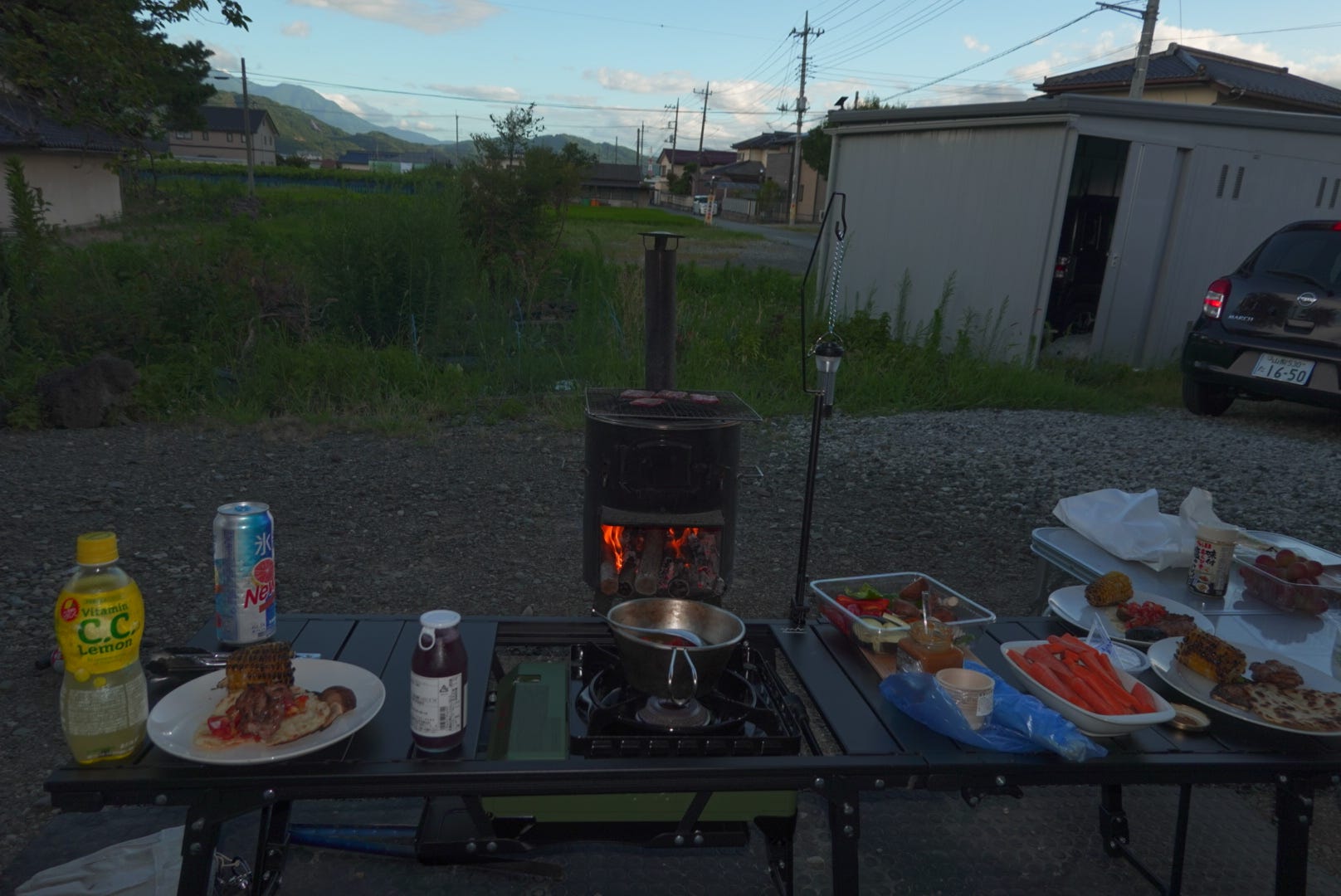
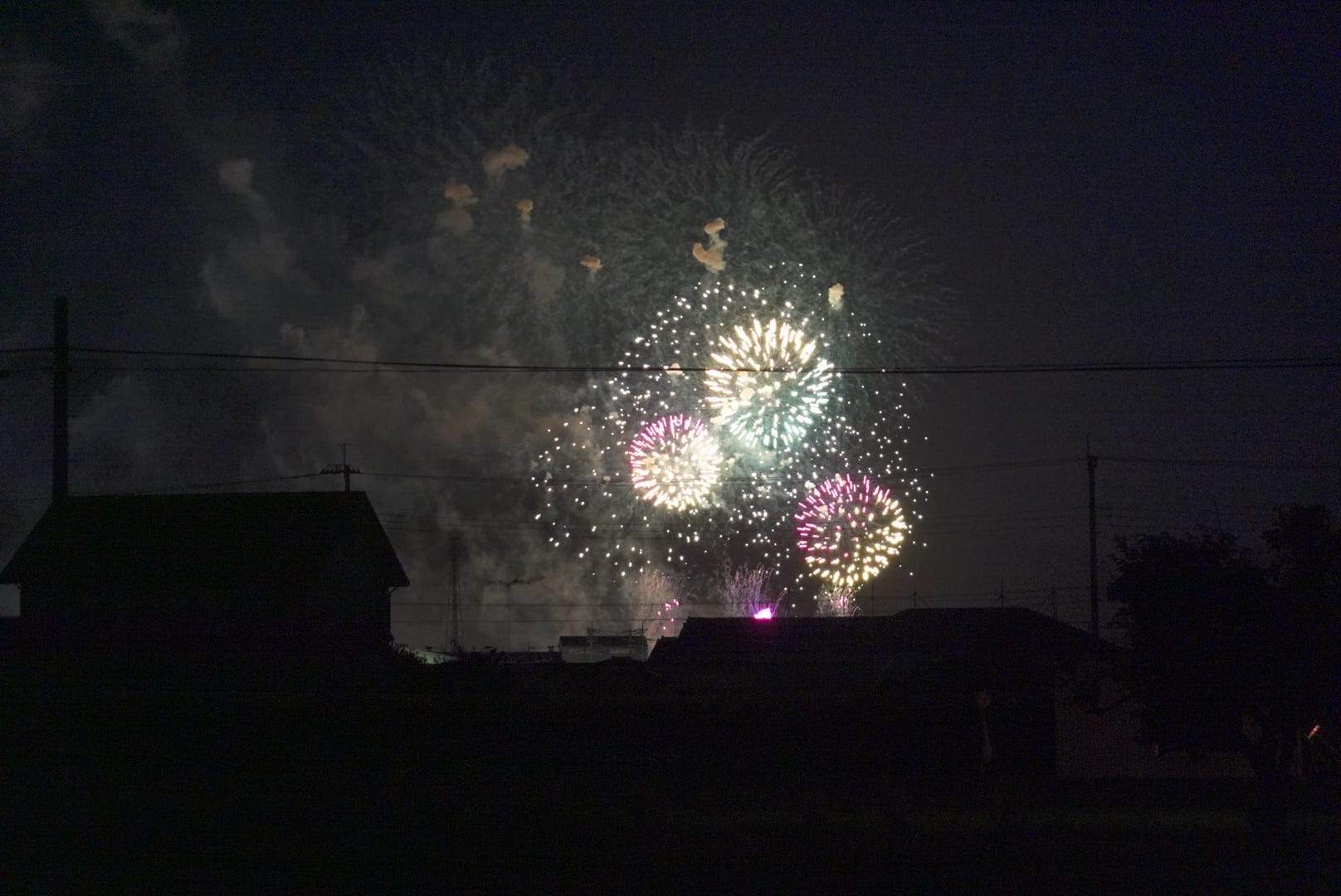
As the sun set, teenagers zipped by on their bikes toward the river and a neighbor and his wife set out their lawn chairs. The fireworks were going to be at least a mile or two away and there was a house on the horizon, so I was skeptical we would see much. I was wrong. For two hours, flares took off like rocket ships and burst into enormous blooms of color, and sometimes even novel shapes, like a frog or a heart. Anytime I disappeared to use the bathroom or retrieve something from the kitchen, my plate magically filled up with more beef, more stew, more fruit. It was like a Hogwarts banquet or Mary Poppins’s bottomless purse. I would look up at Wakako-san and she’d side glance at me with a smile pulling at the corners of her mouth.
When it was time to say goodbye, Wakako-san handed us a parting gift of tickets to an onsen in the mountains overlooking all of Yamanashi Prefecture.
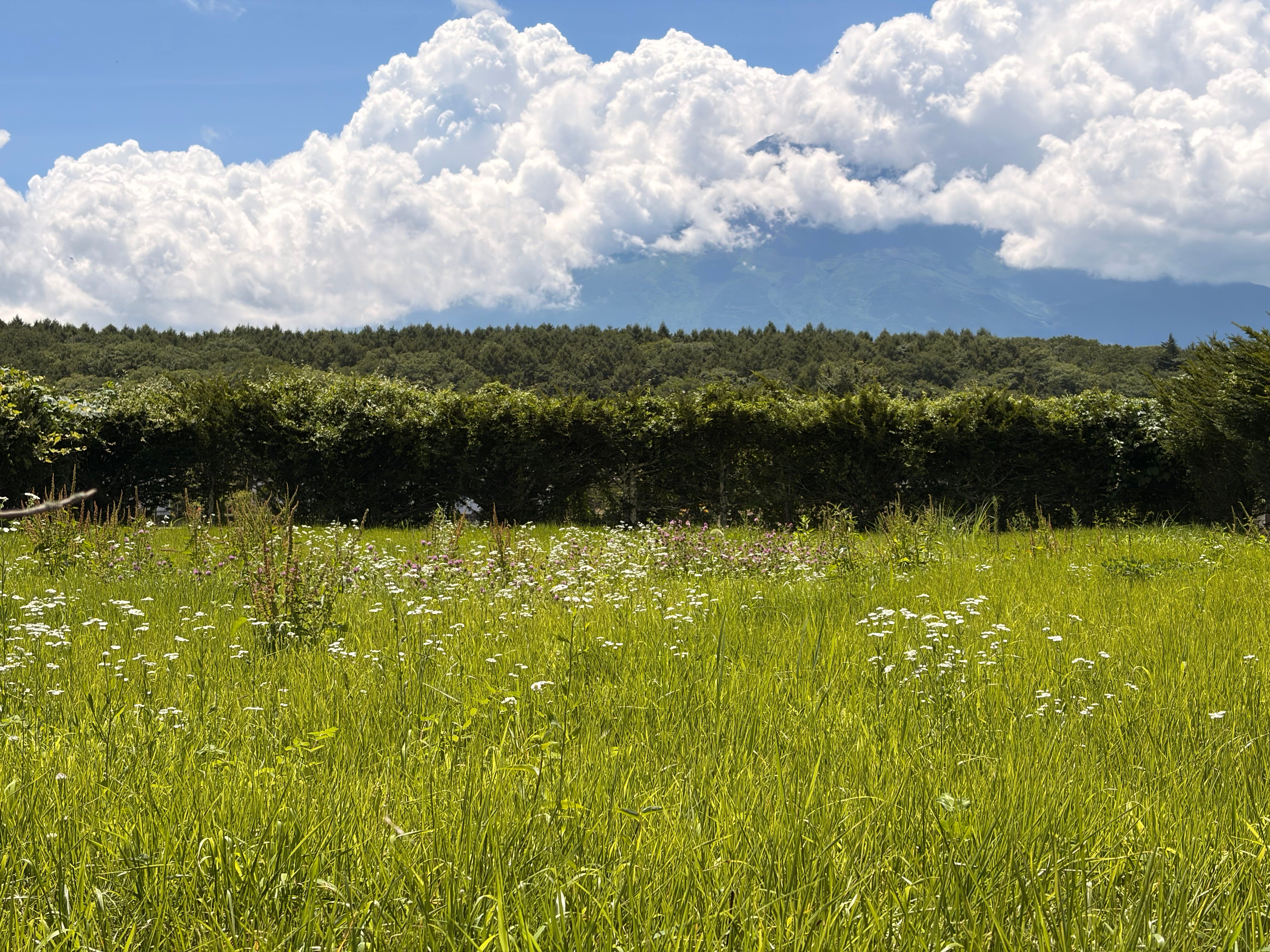
The next morning Kazumi-san took me to Oshino Hakkai, a park famous for its crystal blue ponds with views of Mt. Fuji. But first, we had chores and I felt familiar with how things flowed now. Kazumi-san had to don her mosquito net hat, long pants and boots to water the vegetable garden. I rolled my futon out of the middle of the room and hung the laundry out to dry. I felt folded into the rhythms of the house.


There was so much food left over from the barbecue that the whole day became an exercise in repurposing it for breakfast, lunch, dinner, snacks…it all had to go! Kazumi-san made bread again, which we wrapped around little frozen sausages. Pigs in a blanket, technically, but it felt fancier with the homemade dough. Additionally, we ate pickles she'd made herself, cucumbers and eggplant buried in a tub of rice bran she stirs by hand every day. Which means, she has to carry the tub back and forth to Tokyo on her motorcycle. It cannot be skipped, she explained, the way one might explain watering their plants.
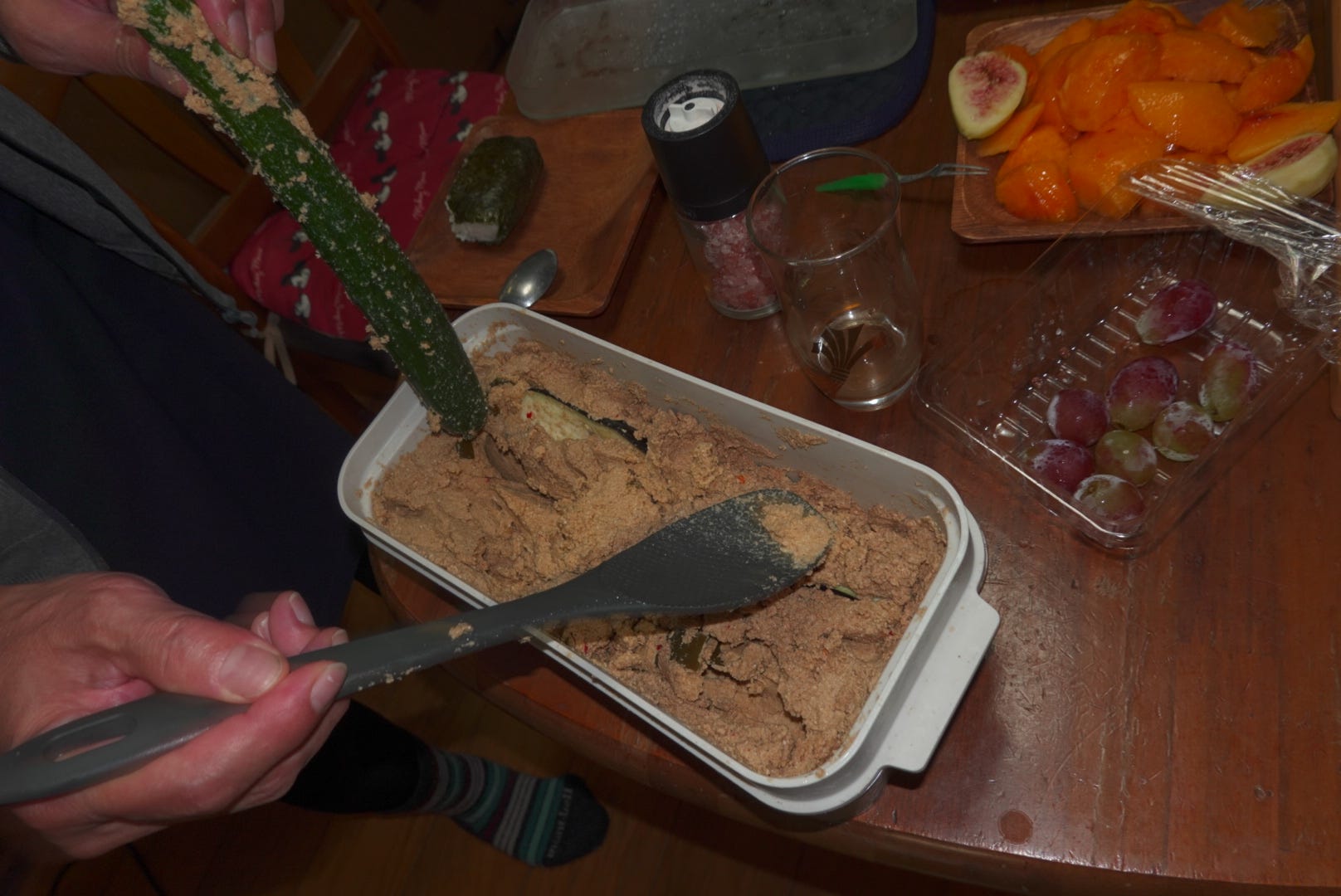
We had forgotten to eat the peaches, so we sliced them up and piled them on a plate. The yellow ones were extra juicy, gold liquid dripping off my fingers and oozing out the corners of my mouth. We also finished off the enormous grapes, which I learned was a variety invented only a year ago and bred, as far as I can tell, to taste like candy. Then, we spent the afternoon preparing for our grand adventure in Kamikochi.
I visit Japan for a variety of reasons. Because I like fresh seafood and clean public spaces and how when people walk by me on the street they smell like soap. It feels like being in The Sims, where it’s emulating real life but it isn’t exactly real. Or like diving into a fantasy novel where there is a sense of escapism, but not without its own trials and tribulations (read: language barriers and cultural differences). It’s different than what I’m used to and yet, very familiar and comforting to me.
But maybe most of all, what I seek is to feel like I belong, a sort of validation that I really am Japanese. A lot of the time, visiting Japan has the opposite effect on me. Most shop clerks switch to English at the sight of me; I fluster anytime I try to speak Japanese and the words just won’t come out or someone says something that I vaguely understand but can’t catch the nuances of; and I get told by people I meet that I look white and they could never have possibly imagined I was half Japanese (hilarious, considering that in the US my Japanese-ness is my differentiating trait). At Kazumi-san’s house, it felt comfortable and natural. I was in the Japanese countryside, I was doing Japanese things, and I was speaking mostly English and eating American-sized portions. I was able to experience that thing I’m often seeking but rarely achieve: to feel like me.
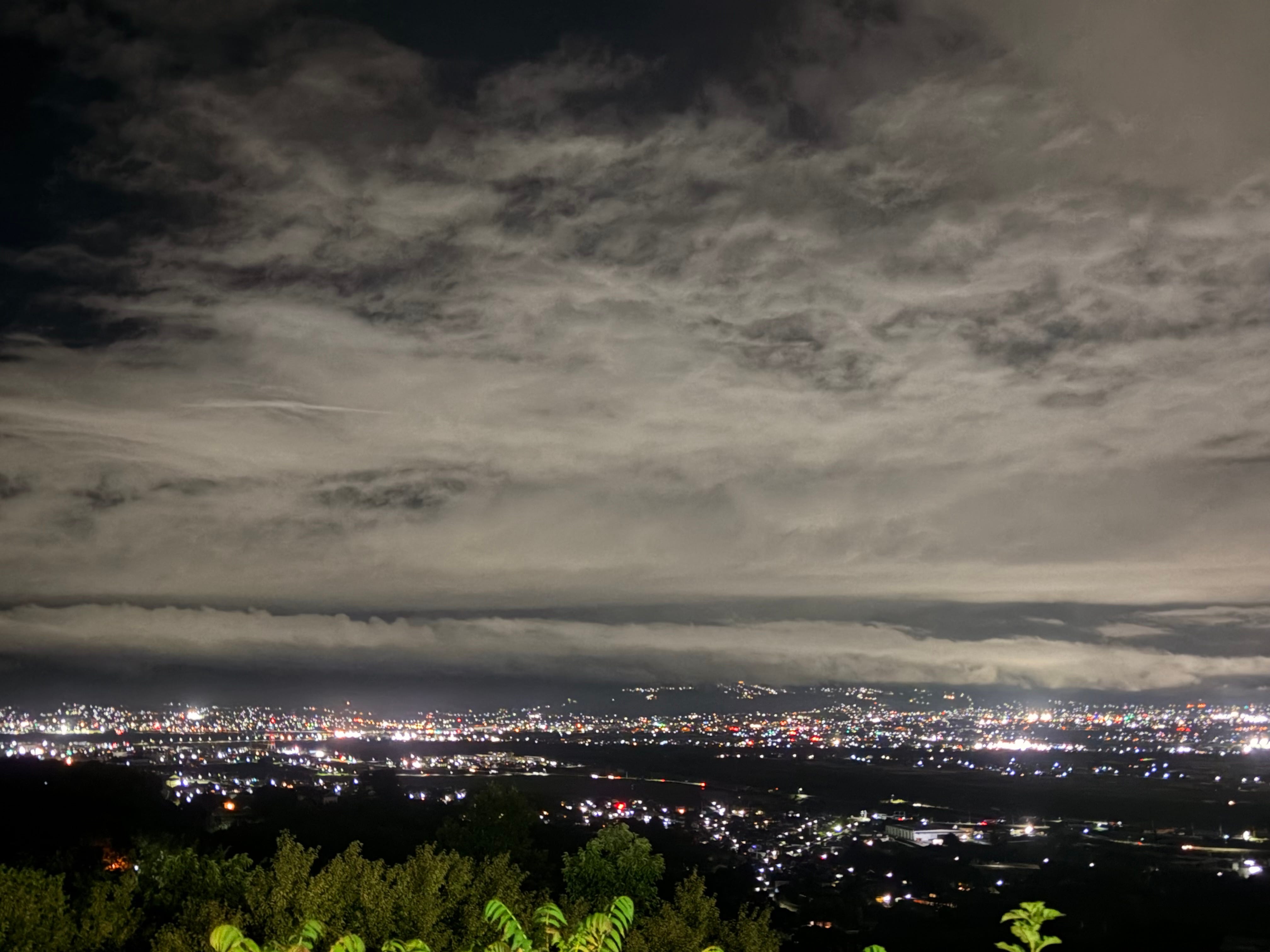
On the eve of Kamikochi, we used Wakako-san’s tickets. Looking out over the prefecture, devoid of tall skyscrapers or obstructions, Kazumi-san described it as a lacquer tray: the mountains like raised edges over the flat valley basin. We bathed outside, looking down into the basin at the lights, glittering like a tray of stars.
Hi ☺ I’m Emi, a writer / filmmaker / artist who takes special delight in observing uniqueness in people, nature, and food. I write stories about daily life as a nomad, meditations on heritage, and my annual visits to Japan.
At the moment, my work consists of bringing a feature film to life with a treasured group of collaborators, auditioning for and occasionally booking tv/films/commercials, and sharing about my life on Substack and TikTok.
I love connecting through shared creativity + curiosity, and I am averse to advising people on what to do or making art for the sole purpose of clicks. Thanks for joining me at My Temporary Address.
Really enjoyed reading about your experiences! Thanks for sharing, it’s a beautiful retelling. And those peaches look so good.
Wow so beautiful, loved this piece💕